Can You Wear Motorcycle Gear to Rob a Bank? (Asking for a Friend)
Is Motorcycle Gear Heist-Proof? What Riding Kit Really Does
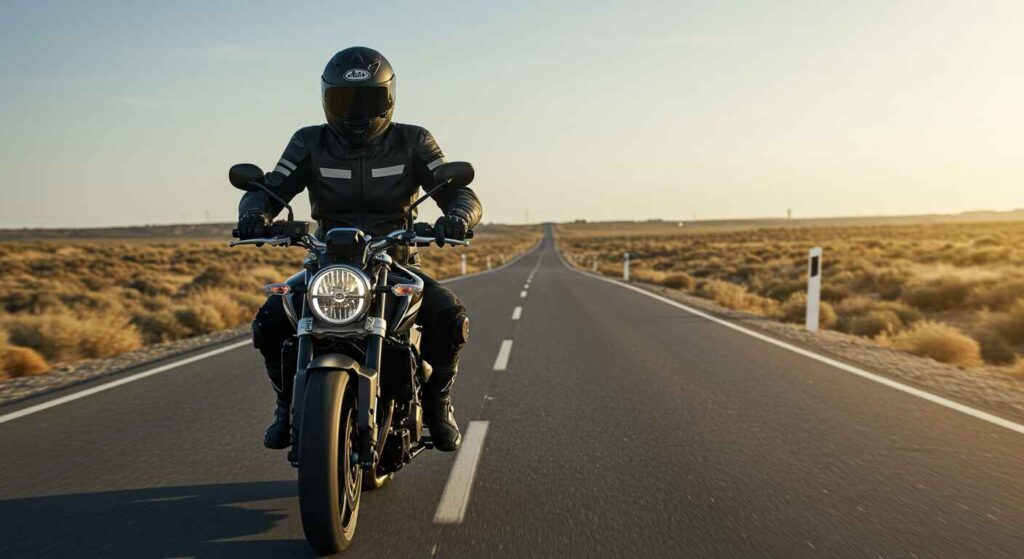
Put a full-face helmet and an armoured jacket under dramatic lighting and they look ready for a film poster. Put the same kit on a rider waiting at a wet junction and its purpose is easier to see. The helmet needs to stay in place, the visor needs to give a clear view and the gloves need to let the rider operate the controls.
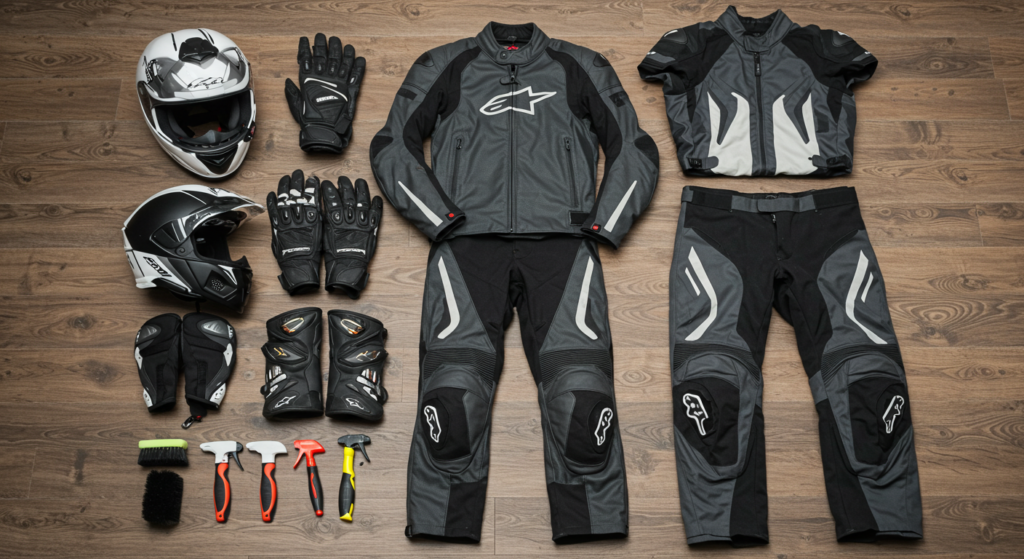
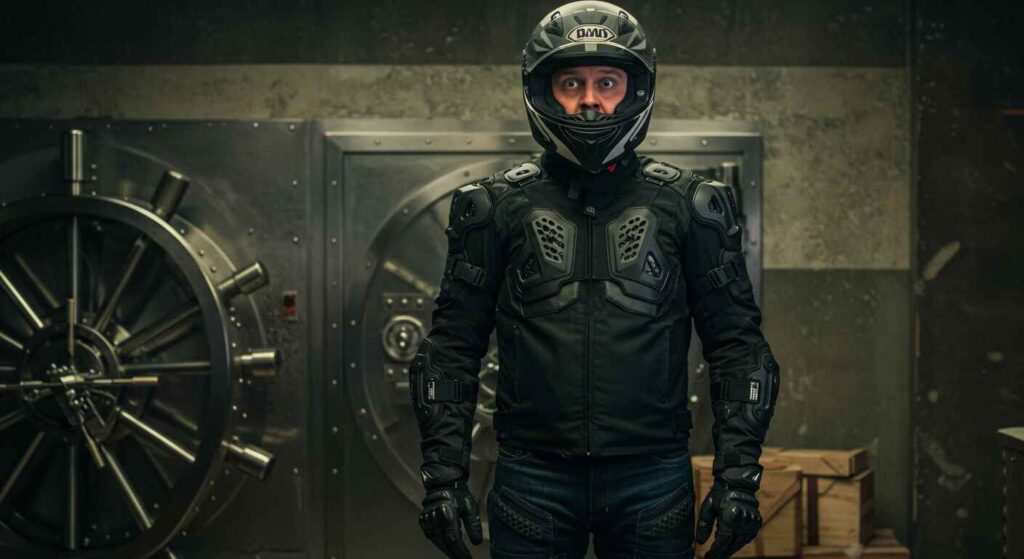
The heist joke works because motorcycle gear looks tougher than everyday clothing. That appearance tells you little about the hazards it was tested for. A helmet, a pair of reinforced jeans and a set of shoulder pads each have a different job in a fall. When you buy motorcycle gear, ask what each item is designed to do and how you can check.
1. Helmets — The Most Recognisable Piece of Motorcycle Gear
In a film, a full-face helmet can do most of the work of a costume. On a bike, the important details are how it fits, how it fastens and how well you can see through the visor. As with the rest of your motorcycle gear, try the exact model and size. Two helmets with the same size on the box can feel different once you fasten the strap.
Start with the markings. GOV.UK lists the helmet safety standards accepted for UK roads, including UNECE 22.05 and 22.06. SHARP’s star ratings give you another way to compare helmets the programme has assessed. SHARP explains the impacts it uses in its helmet tests, and its fitting guide shows how to check for excessive movement or uncomfortable pressure.
Spend a minute with the visor closed and the helmet fastened. If you wear glasses, put them on as well. Check that you can turn your head comfortably with your jacket collar fastened. It’s easier to assess how the helmet works with the rest of your motorcycle gear in the shop than on the first wet ride home.
If you ride after dark, think about which visor you’ll use on the return journey. A clear, approved visor is a practical choice when the light fades. The Department for Transport explains the markings and limits for daytime-only visors in its visor safety guidance.
2. Kevlar Jeans — What the Fibre Does in Riding Clothing
Kevlar® appears in several kinds of protective products, which makes it an easy material for a film joke to exaggerate. In motorcycle gear, manufacturers can use it in reinforcement, fabric or stitching to help improve tear and abrasion resistance. DuPont describes those uses in its motorcycle apparel guide.
The location matters. Reinforcing a seat panel and making a pocket to hold a protector are two different uses of the same fibre. A material name gives you a clue about construction, while a rating tells you what the item was tested to do. Ballistic protection requires separate assessment under a standard such as the UK Home Office body armour standard. To assess jeans as motorcycle gear, check the garment marking, the location of the reinforcement and which impact protectors are included.
GHC Sportswear™ Retail’s men’s motorcycle jeans use 12 oz cotton denim with Kevlar® reinforcement at the seat. Kevlar® mesh pockets hold the removable CE Level 1 knee and hip protectors. If you’re comparing different pairs, our guide to Kevlar jeans and abrasion explains how to assess construction and fit.
3. Armoured Jackets — Fabric, Seams and Protectors
The pads in a motorcycle jacket can give it a broad-shouldered, cinematic look. The jacket earns its place in your motorcycle gear through details that are harder to see, including the strength of the fabric, the way the seams are built and how well the pockets hold the protectors where they belong.
A jacket can meet a garment class under EN 17092, which includes requirements for abrasion resistance, tear strength and seam strength. Check the exact class on the label or in the manufacturer’s documentation. SATRA describes the requirements in its guide to motorcycle garment testing.
For shoulder and elbow protectors, EN 1621-1 measures how much force passes through the protector during an impact test. A back protector has its own standard, EN 1621-2. If the jacket has a back pocket, check whether a compatible protector is included. SATRA explains the separate motorcycle armour standards, and our guide to motorcycle CE ratings helps you interpret the different markings when comparing motorcycle gear.
Try the jacket with your usual trousers before you buy it. Reach forward as you would on the handlebars and check whether the sleeves stay in place and the jacket still covers your lower back. Our motorcycle jacket guide also covers ventilation and fastenings.
If you usually wear a warm layer, bring it when you try the jacket. A jacket that fits neatly over a T-shirt can feel tight across the shoulders over a jumper. Check that the elbow armour still sits where it should and that you can close the cuffs and zip with your gloves on.
4. Gloves — A Secure Fit and Enough Feel for the Controls
A glove can look substantial on a shelf and still be awkward on the bike. This part of your motorcycle gear needs to stay on securely while leaving you enough movement to operate the controls. Knuckle protection may catch your eye first, but the fit around your fingers and the fastening at your wrist deserve just as much attention.
When you try on a pair, check three things:
- Finger fit. Make sure you can bend your fingers comfortably and that excess fabric doesn’t bunch at the fingertips when you close your hand.
- Wrist fastening. Fasten it as the maker intends, then check how it sits with the cuffs of your usual jacket. You should be able to move your wrist without the glove shifting loosely.
- Control feel. With the bike stationary and safely supported, check that you can reach and operate the levers in the gloves you plan to wear.
SATRA explains what EN 13594 covers in its overview of motorcycle glove testing. If you use a light pair in summer and a thicker pair in winter, check how each feels with the rest of your motorcycle gear. Our guide to riding gloves explains why fit and fastening matter alongside the protection rating.
5. Boots — Protection You Can Ride In
In a film, a heavy boot can complete the costume. On a motorcycle, it needs to work with your foot controls and with the trousers you wear. Check that it feels secure at the heel and ankle, that it closes properly and that you can reach the gear lever and rear brake comfortably.
Motorcycle boots can be tested under EN 13634, which covers protective footwear for riders. Its requirements include mechanical protection and how the boot allows you to move. When comparing boots as part of your motorcycle gear, check the markings on the exact model. A chunky sole or heavy-looking upper can change how a boot feels, while the markings tell you which requirements it meets.
Wear your usual riding trousers when trying on boots. With your knees bent, check how the trouser hems and boot tops meet. If you spend time walking after you park, check that the boots are comfortable off the bike as well. The Highway Code recommends strong boots, gloves and suitable clothing in its guidance for motorcyclists.
If the boots use laces, follow the maker’s instructions for securing them. Check the boots with the rest of your motorcycle gear in place, including any waterproof overtrousers you normally wear. See whether the extra layers bunch at the ankle or get in the way when you move your foot.
How to Judge Motorcycle Gear Before You Buy
Start with the journeys you take regularly. A winter commute, a summer day trip and a ride that ends after dark can put different demands on the same jacket or pair of gloves. A few checks can narrow down your options before you compare prices or colours.
- Read the markings on the item. Check which standard applies to the helmet, garment, protector, gloves or boots. If a listing refers to a rating, find out exactly which part it covers.
- Try the full outfit together. With your motorcycle gear fastened, sit as you normally would on the bike. Check the collar, cuffs and ankles for gaps or bunching and make sure the protectors sit in the intended places.
- Check the condition between rides. Pay attention to fastenings, seams and protectors, especially after a fall. Follow the maker’s guidance for inspection and replacement. Our gear maintenance guide covers day-to-day care.
Before ordering motorcycle gear online, find out whether you can try the items together indoors and return them if the fit is wrong. That’s especially useful when you’re replacing several pieces at once.
A costume department can make almost anything look protective. When you choose motorcycle gear, you have better clues. Check the label, move around in the kit and see how it fits with the pieces you already own. The details that matter on your next ride are the ones you can check before you leave.
Follow GHC Sportswear™ Retail on Facebook and Instagram.
Ride smart. Gear up. Know your CE.
Written by the GHC Sportswear™ Retail Team
Trusted by riders who want protection without the blah.