
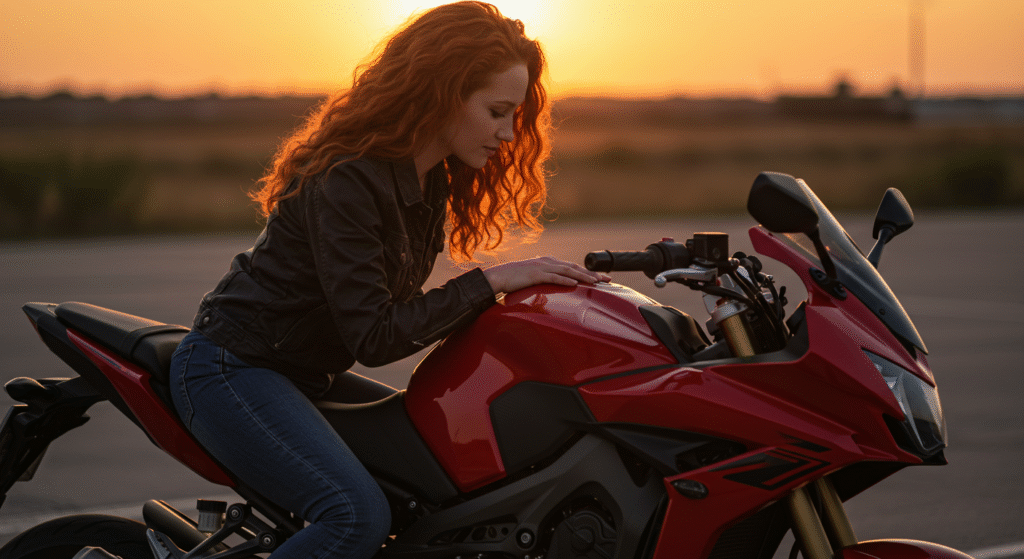
Talking to Your Motorcycle: Exploring Rider Psychology
Talking to Your Motorcycle: Why Riders Do It
Talking to your motorcycle can be as simple as saying “Come on, then” before pressing the starter or thanking it after a long ride home. You know the engine cannot understand the words. Yet speaking to a bike you have spent hours riding, maintaining and occasionally pushing still feels natural.
For some riders, talking to your motorcycle is a joke. For others, it is part of getting ready to leave. A familiar phrase can mark the moment between finishing work and heading out for an evening ride. The interesting part is what that small conversation says about the rider’s attachment, expectations and memories.
Why Talking to Your Motorcycle Can Feel Natural
People often describe familiar objects using human qualities. A printer is “being difficult”, a laptop “refuses to cooperate” and a car “doesn’t like cold mornings”. The same habit can show up when you spend a lot of time around a motorcycle.
Psychologists call this anthropomorphism, meaning the attribution of human characteristics, intentions or emotions to something nonhuman. In their 2007 theory, researchers Nicholas Epley, Adam Waytz and John Cacioppo explored how people’s knowledge of humans, desire to understand an agent’s behaviour and need for social connection can shape this tendency.
That gives us a useful way to interpret talking to your motorcycle. Calling a bike “stubborn” is a familiar human description for an experience that might involve an unreliable starter, a weak battery or a particular starting procedure. The language gives the experience a personality.
You can enjoy that description and still want to know the mechanical cause. Saying “She’s grumpy today” might get a laugh in the garage. The next useful step is to notice what happened when you pressed the starter and investigate it.
Talking to Your Motorcycle and Emotional Attachment
A motorcycle can become associated with events that matter to you. It might be the bike you bought after passing your test, the one you restored with a friend or the machine that took you on your first proper tour.
Those memories give an otherwise ordinary object personal value. A scuff on the tank might remind you of learning to manoeuvre it in a tight driveway. A worn luggage strap might bring back a wet weekend in Wales. Another owner could see a bike of the same model and have a completely different connection to it.
Why riders give their bikes names
A name offers a convenient way to express that attachment. It may come from the paint colour, a registration plate or a running joke among friends. Once it catches on, the name becomes part of how you tell stories about the bike.
Talking to your motorcycle can grow out of that habit. You use the name when it starts first time, when you clean it or when you finally finish a repair. The bike becomes a recurring character in the stories you share.
Why an old bike can be difficult to sell
Practical reasons matter when choosing whether to keep a motorcycle, but memories can make the decision harder. A newer model might offer features you want, while the old one carries years of familiar journeys and work.
If you catch yourself saying “You’ve done well” while preparing a bike for sale, you may be acknowledging that history. It is an understandable way to put a feeling into words at the end of ownership.
Can Talking to Your Motorcycle Help You Settle Before a Ride?
There are several ways to interpret a rider’s pre-ride words. A cheerful “Ready?” can express excitement. A quieter “Take your time” may be directed at the rider as much as the machine.
Research on self-talk offers some context. In a 2017 study published in Scientific Reports, Jason Moser and colleagues examined how people responded to negative images and personal memories while referring to themselves using either “I” or their own name. Using their name was associated with reduced activity in measures linked to emotional reactivity.
The study examined a particular form of self-talk in laboratory tasks. Applying that idea to talking to your motorcycle is an interpretation about how people use words to frame an experience. It gives us a reason to consider the rider’s own inner conversation when they appear to be addressing the bike.
Keep the words simple and useful
Before leaving, you might find a short phrase helpful as a reminder of what you intend to do. “Plenty of time” could prompt you to stop rushing while you fasten your gloves. “Let’s check everything” could mark the start of your usual preparation.
The useful part is the action that follows. Give yourself time to prepare, check your kit and consider whether you are ready for the journey. A familiar phrase can sit alongside that routine.
Talking to Your Motorcycle as Part of a Routine
Your own routine may begin before you put the key in the ignition. You open the garage, move the bike out, put your gloves somewhere convenient and check what you need for the trip. Saying a few words can become part of that sequence through repetition.
For example, a rider might say “What have we forgotten?” while looking over the bike and luggage before a weekend away. The phrase creates a moment to think. It can also be a prompt to check that the luggage is secure and the essentials are packed.
Talking to your motorcycle may feel particularly noticeable after a break from riding. The first start of spring, a return after a repair or the morning before a long trip gives an ordinary action more significance. You have been anticipating that moment, and a few words are one way to express it.
There is room for humour here. You can jokingly ask the bike to behave while still making sensible decisions about its condition, the weather and your plans.
What Riders Mean When the Bike “Talks Back”
A motorcycle provides feedback through its sound, vibration, controls and movement. With repeated use, you become familiar with how your own bike usually feels.
That familiarity can make a change stand out. You may notice a different noise on starting, a new vibration at a particular engine speed or a change in how a control feels. When a rider says the bike is “complaining”, they may be describing a real observation in everyday language.
Talking to your motorcycle can be the verbal part of that moment. “What was that?” expresses surprise when something feels unfamiliar. It can also help you describe what happened once you have stopped.
For a mechanic, specific details are useful. Explain when you noticed the change, whether it happened with the engine warm or cold and what you were doing at the time. If a warning appears or the handling or brakes change unexpectedly, follow the owner’s manual and arrange the appropriate checks before continuing.
The Phrases Riders Use and What They Can Express
The same few words can mean different things depending on the situation. These examples illustrate possible conversations, without presenting them as quotations from interviews.
| What you might say | What the words can express |
|---|---|
| “Come on, wake up.” | Impatience or hope while starting the engine |
| “Let’s take it easy today.” | An intention to make the ride relaxed |
| “What was that noise?” | Surprise at an unfamiliar sound |
| “You’ve earned a clean.” | Satisfaction after a long or muddy ride |
| “That was a good day.” | Enjoyment as you park after a trip |
Talking to your motorcycle can also be shared humour. A friend hears you negotiating with a cold engine, gives the bike a nickname and repeats the story the next time you meet. The joke becomes part of the group’s history.
A solo rider may say the same thing with nobody around to hear it. In that setting, talking to your motorcycle can simply give expression to a thought that would otherwise stay in your head.
Enjoy the Connection and Pay Attention to the Ride
It is easy to understand why talking to your motorcycle feels personal. Riding involves learning how a particular machine responds, spending time maintaining it and making memories around it. A small remark can hold a surprising amount of that history.
You can keep the habit brief and familiar. Before moving off, use the time to prepare. While riding, keep your attention on the road, traffic and controls. After parking, there is plenty of room to replay the good moments or laugh about the less graceful ones.
If you are upset or frustrated before a journey, give yourself time to decide when to leave. If something about the bike feels wrong, investigate the change. The attachment you feel can coexist with a practical view of the machine and your own readiness to ride.
Put the Same Thought into Your Riding Kit
The care that goes into looking after a bike can extend to getting yourself ready. Try your riding kit in the seated position, fasten the closures and check where the protectors sit when your arms and knees are bent.
If you prefer riding denim, our men’s Kevlar® motorcycle jeans use 12 oz cotton denim with Kevlar® reinforcement at the seat and removable CE Level 1 knee and hip protectors. Separate stretch panels at the knees and waist help accommodate the riding position. You can see the features and colour options at GHC Sportswear Retail.
Whether talking to your motorcycle means a quick greeting in the garage or a thank-you after a memorable trip, the words belong to your experience of owning it. Keep enjoying the small rituals, the shared jokes and the stories that make that particular bike yours.
Follow GHC Sportswear Retail on Facebook and Instagram.
Ride smart. Gear up. Know your CE.
Written by the GHC Sportswear Team
Trusted by riders who want protection without the blah.