How to Reduce Your Carbon Footprint as a Motorcyclist
How to Reduce Your Motorcycling Carbon Footprint
A fuel receipt tells you how much you spent at the pump. Keep a note of the mileage as well and you can work out how much petrol the bike actually uses. After a few fills, you’ll have a baseline for seeing whether a change in route, riding habits or mileage makes a difference.
Your motorcycling carbon footprint includes emissions from riding. A wider assessment also looks at producing the fuel, making the bike and replacing parts and kit. Start with the part you can measure easily. Record fuel use over a few ordinary weeks, then pick a change you can repeat and use the same log to see whether it worked.
What Counts Towards a Motorcycling Carbon Footprint?
Burning petrol releases greenhouse gases. Producing and delivering the fuel also contributes to emissions, and a wider assessment can include the manufacture, maintenance and eventual disposal of the bike. Electric motorcycles produce no tailpipe emissions while riding. Their wider footprint includes battery and vehicle production and the electricity used to charge them. An ICCT lifecycle study of motorcycles and scooters illustrates how those stages can be counted using the vehicles and electricity supply it studied in Indonesia.
A fuel log is a useful way to track part of your motorcycling carbon footprint. It works best when you compare similar rides or keep a long enough record to capture your usual mix of journeys. Fuel use can help you estimate greenhouse gas emissions. Local air pollutants such as nitrogen oxides need a separate measure.
1. Measure the Motorcycling Carbon Footprint You Can Track
Write down the distance travelled and litres added at each fill. Use the same fill level each time, following the bike’s refuelling instructions. Divide litres by miles and multiply by 100 to get litres per 100 miles. Averaging several fills reduces the effect of one unusual journey or a difference in how full the tank was.
Here’s an example for a rider who covers 4,000 miles a year using the same petrol blend.
| Average fuel use | Annual distance | Annual petrol use |
|---|---|---|
| 8 litres per 100 miles | 4,000 miles | 320 litres |
| 7 litres per 100 miles | 4,000 miles | 280 litres |
That’s 40 litres less petrol, a 12.5% reduction in fuel use at the same mileage. To estimate greenhouse gas emissions for this part of your motorcycling carbon footprint, multiply the fuel used by the matching per-litre factor from the UK government’s greenhouse gas conversion factors. Note the fuel type, factor year and whether the estimate covers direct emissions or also includes fuel production and supply.
Keep a short note on each fill, especially if it follows a long tour or a week of short trips. Fuel prices move, so spending £10 less at the pump tells you less than a change in litres per 100 miles. The useful comparison for your motorcycling carbon footprint is between similar journeys or periods long enough to include your usual mix of riding.
2. Plan Trips Around the Miles You Need
Fewer miles on the same bike generally mean less fuel use. To reduce your motorcycling carbon footprint, look at journeys that already take you past places you need to visit. A stop on your way home may save a separate round trip. Check both directions so you know how much riding the plan actually adds.
The shortest route on a map can be slow in traffic. The quickest route may add miles. Compare a couple of options for a journey you make often, then use your fuel log over several rides to see what happens. For a day out, choose where you want to spend time before adding extra stops. Our motorbike day trips from London guide shows how optional detours change the mileage and the time you’ll need.
3. Ride Smoothly and Switch Off When Parked
Look ahead so you can adjust to a changing speed limit, a queue or a junction in good time. Smooth acceleration and steady riding where conditions allow can help you avoid repeated bursts of throttle and braking. Choose a gear that suits your speed and your motorcycle, and leave enough time and space to react to traffic.
Parked idling adds to your motorcycling carbon footprint without adding miles. At a café stop or meeting point, switch off once you’re safely parked. In Great Britain, Highway Code Rule 123 prohibits unnecessary idling while stationary on a public road and allows the engine to run while you’re stationary in traffic.
4. Check Tyre Pressures and Follow the Service Schedule
Maintenance gives you a baseline for comparing your motorcycling carbon footprint over time. Check cold tyre pressures against the manufacturer’s figures for your usual load. If you’re taking a passenger or extra luggage, check whether the handbook specifies a different setting. The DVSA’s motorcycle safety questions cover how to check tyre pressures and condition.
Follow the bike’s service schedule, including the specified checks for its drive system. If fuel consumption rises across several comparable fills, consider whether the load, weather or route changed. If those factors stayed much the same, ask a technician to check the bike. When servicing leaves you with used oil or worn parts, our guide to recycling and reusing motorbike parts explains how to find the right collection service.
5. Compare Fuel Use Before Buying Another Bike
If you’re shopping for a replacement, look at published fuel consumption for the specific models. Engine size gives you only part of the picture of your motorcycling carbon footprint. Compare bikes suited to the same job, using figures measured on the same basis where possible. Think about the mileage you’ll cover and how much of it is in town, on faster roads or with luggage.
For an electric motorcycle, compare the range you’ll need with where you can charge. Look for energy consumption in kilowatt-hours per mile or per kilometre if the manufacturer provides it. A comparison across the bike’s life also depends on the electricity used for charging, how the battery and bike were made and how long they stay in service.
If your bike is serviceable, you can keep riding it while you measure its fuel use. If a replacement is already due, use the log as a reference. You’ll have a better idea of how a candidate bike compares on the journeys you actually make.
If you’re weighing up a motorcycle and a car for the same commute, compare the fuel or electricity each would use on your route. Include the number of people travelling if you want a per-person estimate. A comparison tells you more about your motorcycling carbon footprint when it reflects the trips you’d actually make.
6. Check E10 Compatibility for Your Exact Motorcycle
UK E10 petrol contains up to 10% ethanol. If you’re considering fuel choice as part of your motorcycling carbon footprint, use the GOV.UK E10 checker and check the manufacturer’s guidance for your model and year. This matters particularly for older motorcycles and some mopeds. If the model is missing from the checker, consult the manual or ask the manufacturer.
The government’s E10 guidance explains how blending ethanol reduces the amount of fossil petrol used. It also notes that E10 can slightly reduce fuel economy. If you change blends, record it in your log. The litres you buy and the emissions associated with each litre are separate parts of the calculation.
7. Keep Useful Kit in Service
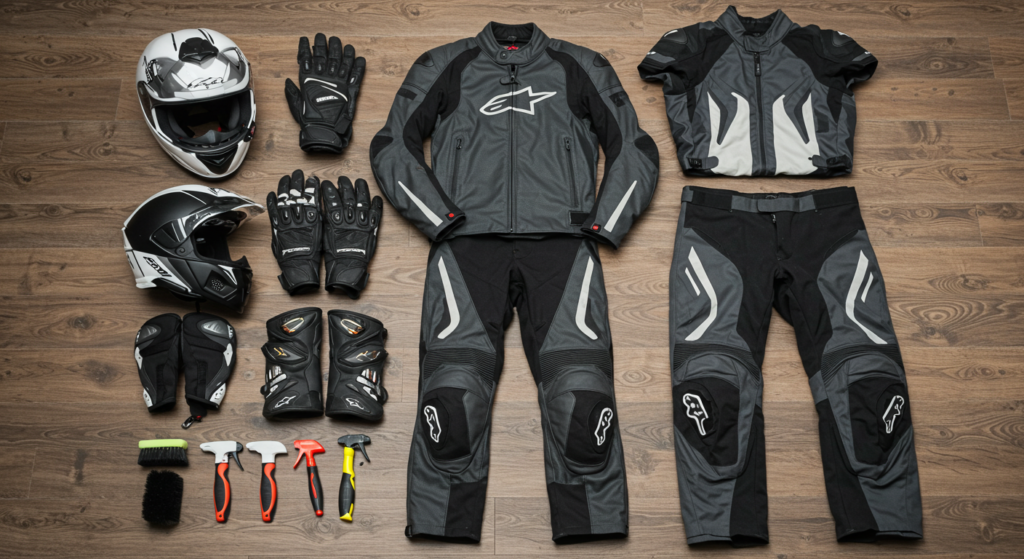
If you include equipment in your motorcycling carbon footprint, start with what you already own. Clean it as directed, look for compatible spares and get damage assessed before relying on it. If you’re buying a replacement, check how it fits and whether you can maintain it over time. Our motorbike gear lifecycle guide explains what to ask about design, delivery, repair and disposal.
Follow the helmet manufacturer’s replacement guidance and replace a helmet that took an impact while you were wearing it in a crash. For other kit, ask about approved repairs and check how removable parts should be cleaned and refitted. Our motorbike gear maintenance guide covers the checks that help you decide what needs attention.
Where Offsets Fit Into a Motorcycling Carbon Footprint
If you support a climate project, track that separately from reductions you measure in your fuel log. The Oxford Principles for Net Zero Aligned Carbon Offsetting put direct emissions cuts first and emphasise the quality and durability of any credits used. The effect of supporting a project depends on what it delivers and how those outcomes are measured.
Start With One Change to Your Motorcycling Carbon Footprint
Write down your mileage and fuel at the next fill, then choose one change you can repeat. Combine two errands, compare your usual routes or follow up on a service check. After several fills, compare your total miles and litres per 100 miles. You’ll see whether you rode less, used less fuel for the same distance or did both. That gives you a practical way to check the part of your motorcycling carbon footprint you set out to reduce.
Follow GHC Sportswear™ Retail on Facebook and Instagram.
Ride smart. Gear up. Know your CE.
Written by the GHC Sportswear™ Retail Team
Trusted by riders who want protection without the blah.