Motorbike Accessories: Top 10 Must-Have Items for Every Rider
10 Essential Motorbike Accessories and Pieces of Riding Gear
A helmet you can wear comfortably for an hour, gloves that let you feel the controls and a bag that stays put can make an ordinary ride easier. The most useful motorbike accessories solve a problem you actually have, whether that’s wind noise on the motorway or finding somewhere to carry a spare layer.
This list starts with what you wear, then covers what to carry and how to protect the bike when you park. If you’re buying your first kit, work through the protective items first. If you already ride, use the list to spot the one or two things that would make your usual journey easier.
Protective Gear and Motorbike Accessories to Buy First
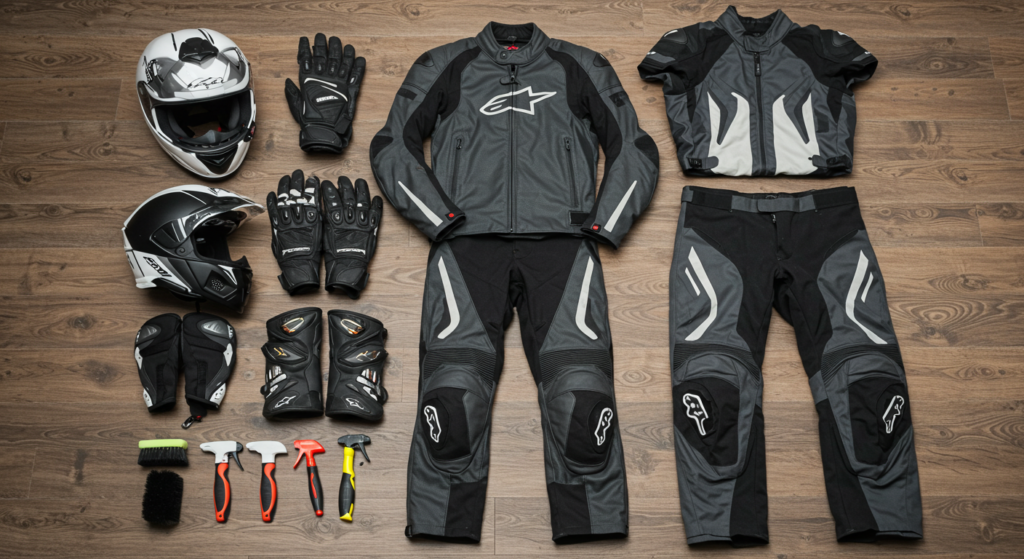
Start with the helmet, gloves, jacket, boots and trousers. Try them together if you can. A jacket that fits in the shop can pull at the wrists once you reach forward, and trouser cuffs can bunch over taller boots. Motorbike accessories are easier to choose once you know how the kit you’ll wear every day fits together.
1. A Properly Fitted Helmet
In Great Britain, most riders and pillion passengers must wear a helmet that meets an accepted standard and is securely fastened. UNECE Regulation 22.06 is one of the standards listed in the government’s motorcycle helmet guidance. Check the label when buying and read the SHARP fitting guide before trying different models.
Check fit before comparing colours and extra features. With the strap fastened, the helmet should sit firmly without painful pressure points. Wear it for a few minutes and check that it stays in place when you gently try to move it. If you wear glasses, try them with the helmet. A frame that presses at the temples can feel quite different after half an hour.
2. Gloves That Let You Feel the Controls
Gloves are among the motorbike accessories you’ll notice most on an ordinary ride. They should sit securely at the wrist and leave you enough movement to reach the front brake, clutch and switches. Put on both gloves, fasten them and check the fit with your hands curved around a grip. Loose material at the fingertips or a tight seam at the thumb is easier to spot in that position.
Look for EN 13594 on the exact model. SATRA’s motorcycle glove guide explains how palm abrasion, seams and wrist fastenings are tested. Our guide to budget motorcycle gloves covers how to compare fit, protection and weather features before paying for extras.
3. A Jacket You Can Wear in Your Riding Position
When comparing motorbike accessories and clothing, try your jacket as you’ll wear it on the bike. Fasten it, reach forward and turn your head. Check that the cuffs meet your gloves and the shoulder and elbow armour covers the intended areas. If the jacket has a back protector pocket, find out whether the protector is included.
Look for the jacket’s EN 17092 garment class and check the separate ratings on the protectors. SATRA’s protective clothing guide explains what the standard tests. Once you’re happy with fit and protection, consider ventilation, waterproofing and whether your usual layers fit underneath. Our motorcycle jacket guide explains how those features affect everyday use.
4. Boots That Work With Your Bike’s Foot Controls
Try motorcycle boots with your riding socks and trousers. Check that the fastening holds your foot securely, then move your ankle as you would to use the gear lever or rear brake. A boot can be comfortable to walk in and still feel bulky around the toe when you try to shift gear.
For tested motorcycle footwear, look for EN 13634. It covers construction, abrasion and impact-cut resistance. Resistance to water penetration and outsole slip are optional tests described in SATRA’s motorcycle footwear guide. If you commute in wet weather, check what the manufacturer specifies for the exact boot. If you walk a fair distance at either end of the ride, spend a few minutes walking in the boots before deciding.
5. Protective Riding Trousers or Motorcycle Jeans
Try protective trousers seated as well as standing, especially if you’ll wear them all day. Look for the EN 17092 garment class and check which knee and hip protectors are included. With your legs bent, the knee protectors should sit over your knees and stay comfortable when you move your feet towards the controls.
If you prefer denim, the GHC Sportswear™ Retail shop lists men’s Kevlar® motorcycle jeans with removable CE Level 1 armour. When you shop for riding clothing and motorbike accessories, compare the garment classification and armour ratings separately. Our guide to motorcycle CE ratings explains what each marking tells you.
Motorbike Accessories for Clearer, Quieter Rides
6. A Clear Visor or Compatible Goggles
Check what your helmet already comes with before buying more motorbike accessories. A clear, compatible visor may cover your needs for daylight, dusk and night riding. If you use goggles, try them with the helmet to make sure they sit securely and give you a clear view. GOV.UK lists the accepted standards for visors and goggles used on the road.
Check your visor for scratches and dirt before you leave. A scratch can be especially noticeable when an oncoming headlight catches it. If misting is a recurring problem, check which anti-fog inserts or ventilation settings your helmet manufacturer recommends. Try the setup before a wet commute so you know how to keep the view clear with minimal adjustment.
7. Earplugs That Sit Comfortably Under Your Helmet
Wind noise can be considerable on longer rides. Research into hearing loss in motorcyclists found evidence of temporary and lasting hearing changes associated with riding. Well-fitted hearing protection is one of the simplest motorbike accessories to carry if you regularly spend time at higher road speeds.
Follow the fitting instructions for your earplugs and try them with your helmet on. A plug that feels fine on its own may shift or press uncomfortably when the padding moves past your ear. Keep a clean spare pair somewhere easy to reach if you use disposable plugs. If you use reusable ones, store them in a case so they stay clean between rides.
Motorbike Accessories for Parking and Carrying Essentials
8. A Cover for Where You Park
A cover earns its place if your bike spends much of its time outdoors. Pick one intended for outdoor use if it will sit in rain, and check the measurements with any screen, top box or panniers fitted. A cover that fits the bare bike may come up short once the luggage is on. Check how it fastens and whether you can put it on and remove it easily in the space you have.
Of the motorbike accessories here, a cover depends most on where you park. A dry garage may call for little more than a dust cover. Follow the manufacturer’s fitting instructions and let the exhaust and engine cool before covering the bike.
9. A Tank Bag That Clears the Controls
A tank bag gives you somewhere to put small things you want to reach at a stop, such as a spare layer, keys or a paper map. Check which mounting system suits your bike. A magnetic bag needs a suitable tank surface. A tank-ring bag needs the correct fitting, and a strap-mounted bag needs secure attachment points.
Fit the bag as directed, then check it with your usual load while the bike is parked. Turn the bars fully both ways and check that the bag leaves the controls, instruments and steering clear. Secure loose straps and follow the stated load limits. When you compare motorbike accessories for carrying kit, choose the capacity you’ll use most often. A bigger bag can take up room at the bars even when it’s half empty.
10. A Compact First Aid Kit
A first aid kit is one of the motorbike accessories you can keep packed between rides. Choose a case that fits the space you have and protects the contents from rain. Put it somewhere you can reach when you’re stopped, such as near the top of a pannier.
For a starting point, St John Ambulance’s first aid kit guide lists items such as sterile dressings and disposable gloves. Check expiry dates where they’re marked and replace anything you use. If you ride with others, tell them where you keep the kit so someone else can find it if needed.
Choose Motorbike Accessories for the Ride You Actually Do
- For commuting, start with protective kit that fits and works in your usual weather. Add clear eye protection, hearing protection and enough luggage for the things you carry daily.
- For longer rides, decide where the first aid kit and spare layers will go before you pack everything else. A bag that opens easily at a stop can save you unpacking the bike in the rain.
- For outdoor parking, choose a cover that fits the bike as you normally leave it, including any luggage that stays attached.
If you’re deciding which motorbike accessories to buy next, think about what you reach for at every stop. You might need a better place for your keys, or you might want a bag that holds a spare pair of gloves. Either observation tells you how much space to look for.
Before buying more motorbike accessories, check what you already own. A clean visor, a properly adjusted glove fastening or a bag you’ve repacked may solve the problem you noticed on the last ride. Our motorbike gear maintenance guide covers the checks that help you decide what to keep using and what needs attention.
Follow GHC Sportswear™ Retail on Facebook and Instagram.
Ride smart. Gear up. Know your CE.
Written by the GHC Sportswear™ Retail Team
Trusted by riders who want protection without the blah.