How to Get Rid of helmet odor : Biker’s Guide to a Fresh Ride
How to Get Rid of Helmet Odour
To get rid of helmet odour, start with the padding that touches your head and face. Wash removable parts according to your helmet’s manual, wipe fixed padding as directed and let everything air-dry completely before you refit it or ride. If your helmet comes home damp after every commute, giving it time to dry between rides may make the biggest difference.
Check the instructions for your exact model before taking anything out. Some helmets have removable cheek pads and a washable crown liner. Others have padding that stays in place, or pads whose fabric covers can be washed separately. The manual tells you which parts are designed to come out and what you can use to clean them.
What Causes Helmet Odour?
The fabric around your cheeks and scalp picks up sweat, skin oils and traces of hair products. A helmet that feels dry on the outside can still be damp where the padding presses against your skin. Close it in a bag after a wet or sweaty ride and that moisture takes longer to escape.
Check which part smells strongest. If it is mostly around the cheek pads, start there. If your whole kit smells musty after a ride in the rain, give the helmet, helmet bag and any washable layer you wore underneath time to dry separately. That way, a clean helmet goes back into dry storage.
When helmet odour keeps coming back, look at where the helmet spends the night. A wash can clean the fabric, but the same problem can return if the padding stays damp between rides.
How to Remove Helmet Odour From a Removable Liner
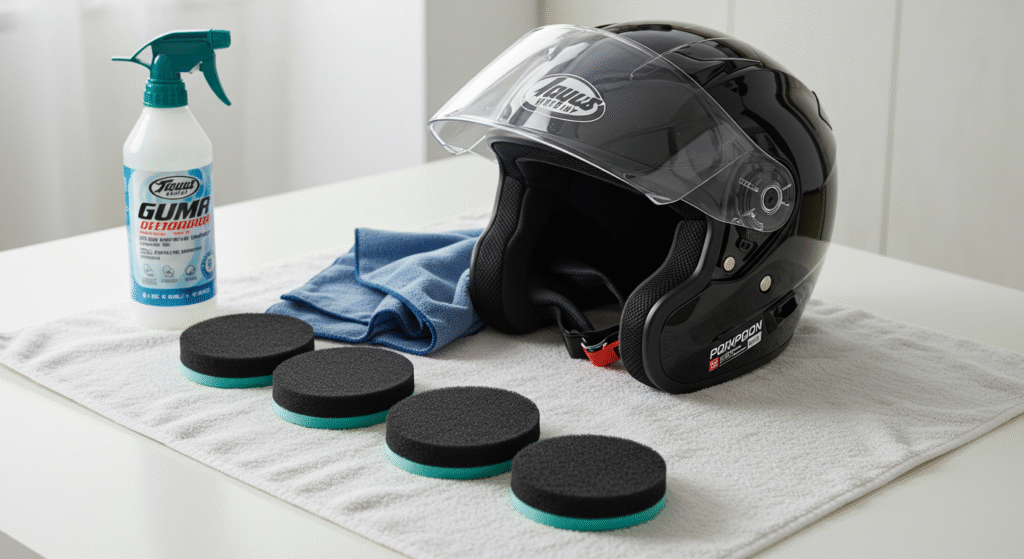
Read the care section of your manual, then gather a soft cloth, a clean basin and the detergent the maker specifies. Give yourself enough time for drying, especially if this is the helmet you use for your morning commute.
- Remove only the parts the manual identifies as removable. Follow the instructions for the cheek pads, crown liner or fabric covers. If you are unsure which clips or tabs to release, check the diagram before pulling.
- Wash the fabric using the specified method. If hand washing is recommended, use the stated water temperature and cleaner. Work gently over areas that collect sweat, especially where the pads touch your cheeks and forehead.
- Rinse as directed and let the parts dry naturally. Lay them out in a ventilated place at room temperature, away from direct heat. Check thicker seams and foam-backed areas for dampness before putting the helmet back together.
- Refit the parts in the correct position. Engage each clip or tab as the manual shows. Make sure the chin strap is routed correctly and check that the helmet still fits securely when fastened.
Manufacturer instructions differ. SHOEI, for example, allows machine washing of certain removable comfort liners at 30°C in a laundry bag with a neutral cleaning agent. The Arai Quantic manual specifies gentle hand washing for the relevant fabric covers. If you want to clear helmet odour without damaging the liner, use the instructions for the parts you have in front of you.
How to Tackle Helmet Odour When the Padding Is Fixed
For fixed padding, the usual starting point is a soft, damp cloth. Wring it out so you can wipe the fabric without soaking the helmet. If your manual permits a diluted neutral cleaner, use it as directed. Wipe away any residue with a separate damp cloth if the care instructions call for it.
Spend a little time on the fabric near the cheeks and forehead, where sweat tends to collect. Let the interior air-dry thoroughly. If your helmet still smells when the padding is dry, check whether you missed a removable part or whether the bag or skull cap you use also needs cleaning.
The soft comfort padding is separate from the expanded polystyrene (EPS) layer that helps absorb impact. Leave that structural foam in place. If the manufacturer provides a method for cleaning an exposed area of EPS, follow it gently and avoid solvents, heat or pressure that could dent the foam. Focus on the fabric when treating helmet odour.
Which Products Are Suitable for Helmet Odour?
Use the cleaner recommended for your helmet and for the specific part you are washing. A visor, a fabric cover and the impact liner can each have different care instructions. Even a bottle labelled as a helmet cleaner may only be intended for the shell or visor, so read the label alongside the manual.
Skip the vinegar, bicarbonate of soda, essential oils and alcohol-based sprays unless the manufacturer specifically approves them for that part. SHOEI and AGV warn against solvents and advise careful drying away from heat. For a damp interior, give the padding more time in a ventilated room instead of reaching for a hairdryer or putting it next to a radiator.
A fragrance can change what you smell when you first pick up the helmet. If the goal is to remove helmet odour, clean the sweat-contact surfaces and let them dry before judging the result.
Keep Your Helmet Fresh Between Washes
After a ride, leave the helmet on a stable surface in a dry, ventilated room. Give the interior time to air before putting it away. If you use a helmet bag for storage, make sure both the helmet and the bag are dry first. Check the bag’s own care label if it starts to smell.
A thin, washable skull cap or balaclava may help keep some sweat and hair products off the comfort liner. Try it with your helmet fastened and check that it still fits properly. Wash the extra layer regularly and let it dry between uses.
If helmet odour is mainly a problem in summer, pay attention to how long the padding takes to dry after your usual ride. You might find it easier to wash removable pieces on an evening when you have time to leave them out until they are fully dry. For daily use, a regular airing routine is simpler than waiting for the smell to get strong.
When Cleaning the Liner Is No Longer Enough
If the fabric still smells after you have cleaned and dried it as directed, inspect the comfort padding for wear. Ask the maker or an authorised dealer whether a replacement liner or cheek-pad set is available for the exact model and size. Use compatible parts and recheck the fit once you have installed them.
Treat condition and fit as separate checks from helmet odour. If the helmet has taken an impact in a crash, stop using it and follow the maker’s replacement guidance. If you find damage to the shell, impact liner or chin strap, seek the manufacturer’s advice before using it again. Follow the replacement interval for your own helmet. The manufacturer’s guidance may depend on age, use and condition.
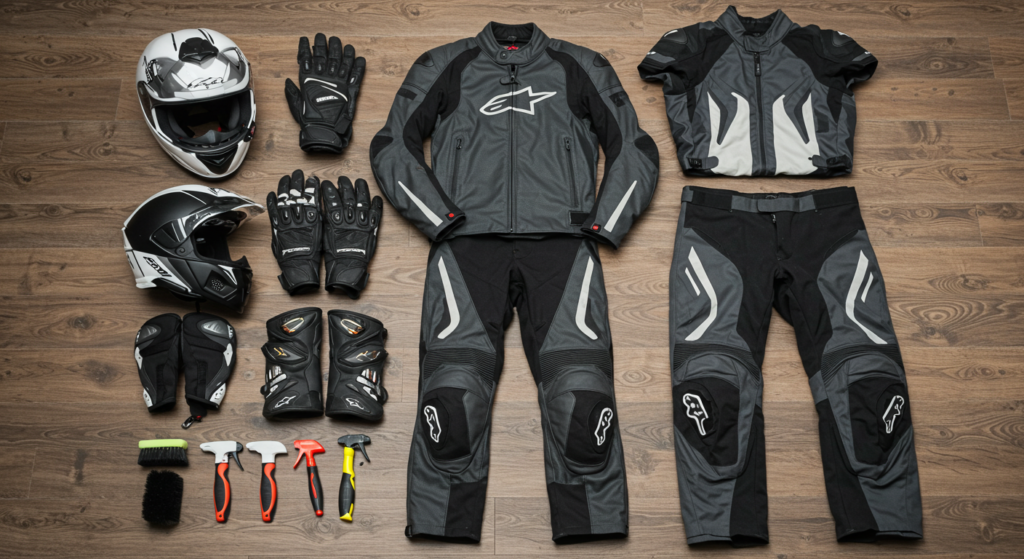
The same habit of checking care instructions applies to the rest of your kit. Our men’s Kevlar® motorcycle jeans at GHC Sportswear™ Retail have removable CE Level 1 knee and hip protectors. Follow the garment’s care information when cleaning them.
Follow GHC Sportswear™ Retail on Facebook and Instagram.
Ride smart. Gear up. Know your CE.
Written by the GHC Sportswear™ Retail Team
Trusted by riders who want protection without the blah.