How to motorcycle crash survival: Real Rider Safety Tactics
Motorcycle Crash Survival: What to Do Before and After a Collision
Motorcycle crash survival starts with giving yourself time to react, wearing protective kit that fits and knowing how to get help. If a serious collision has just happened, check for immediate danger and call 999 or 112. Give your location, explain what has happened and follow the call handler’s instructions.
Before a ride, you can check the bike, choose a speed that suits what you can see and build skills through training. At a crash scene, the priorities change. Moving traffic, a rider who cannot respond and heavy bleeding each call for different action. Knowing the first steps in motorcycle crash survival can help you focus while emergency services are on their way.
Motorcycle Crash Survival Starts With Preparation
Check the things you depend on every time you ride. Look at the tyres and check their pressures against the manufacturer’s recommendations. Check that the brakes and lights work, the mirrors are set and any luggage is secure. Follow the handbook for checks specific to your bike, including chain condition and adjustment where applicable. If a control feels different or a warning appears, investigate before you set off.
On the road, look ahead for changes that might affect your line or speed. A parked van can hide a junction. A bend may tighten beyond the part you can see. Leave a following gap that gives you room to slow down, and choose a speed that lets you stop within the distance you can see to be clear. Allow more room when conditions make visibility or stopping worse.
The most useful part of motorcycle crash survival planning often happens before a hazard becomes urgent. If you see a car waiting to turn across your path, give yourself time to respond by reducing speed early and watching for movement. If a group ride is moving faster than feels right for the conditions, keep your own pace and meet the others at the agreed stop.
Motorcycle Crash Survival and Protective Gear
Choose a helmet that fits securely and meets an accepted UK road standard, such as UNECE Regulation 22.06. Fasten it as the manufacturer directs and check that the visor gives you a clear view. A label that only shows US DOT approval does not establish that the helmet meets the UK requirements.
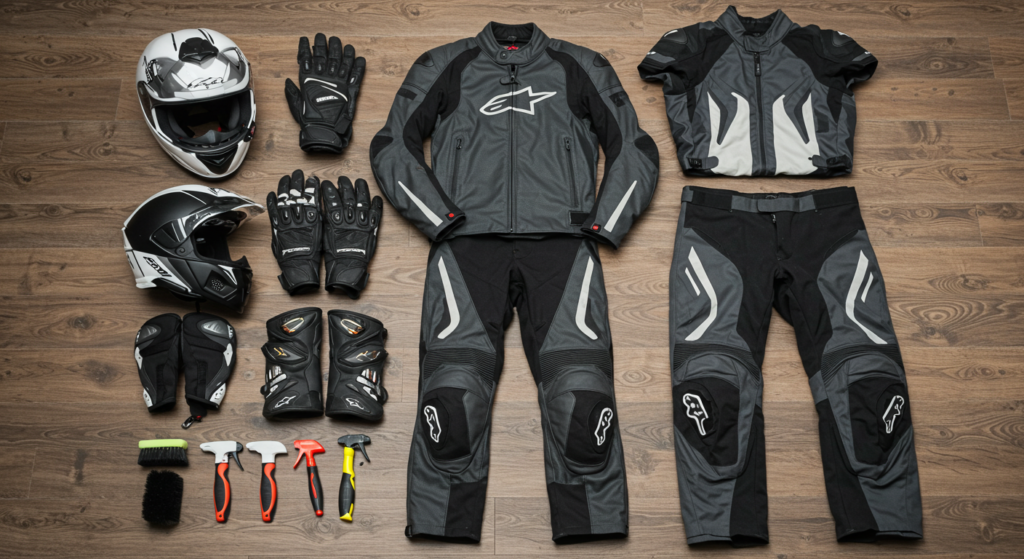
For jackets and trousers, check the garment standard and class separately from the ratings on the impact protectors. EN 17092 covers protective motorcycle clothing, including tests for abrasion and seam strength. Armour has separate ratings for its performance in impact tests. Look for motorcycle gloves and boots that fit and close securely, and make sure you can operate the controls comfortably with your full kit on.
For motorcycle crash survival, gear fit matters as much as reading the label. Sit in your riding position and see whether the protectors stay over the intended areas when you bend your elbows and knees. Check that the cuffs, waist and ankles still give the coverage you expect.
Our men’s Kevlar® motorcycle jeans at GHC Sportswear™ Retail use 12 oz cotton denim with Kevlar® reinforcement at the seat and removable CE Level 1 knee and hip protectors. The Level 1 rating applies to the protectors. Check the product information for garment details and sizing.
Motorcycle Crash Survival at the Scene
Look for moving traffic, fire or another immediate danger before approaching. If you are stopping to help, park somewhere that keeps you clear of the collision and gives you a safe way to call for help. Guide people who are uninjured away from traffic if you can do so safely.
Call 999 or 112 for a serious crash or life-threatening injury. On a motorway, give the road number and direction of travel. If you can see a marker or junction number from a safe position, give that too. Say how many people are involved and tell the call handler straight away if anyone is unresponsive, having trouble breathing, bleeding heavily or trapped.
If you are the rider who crashed
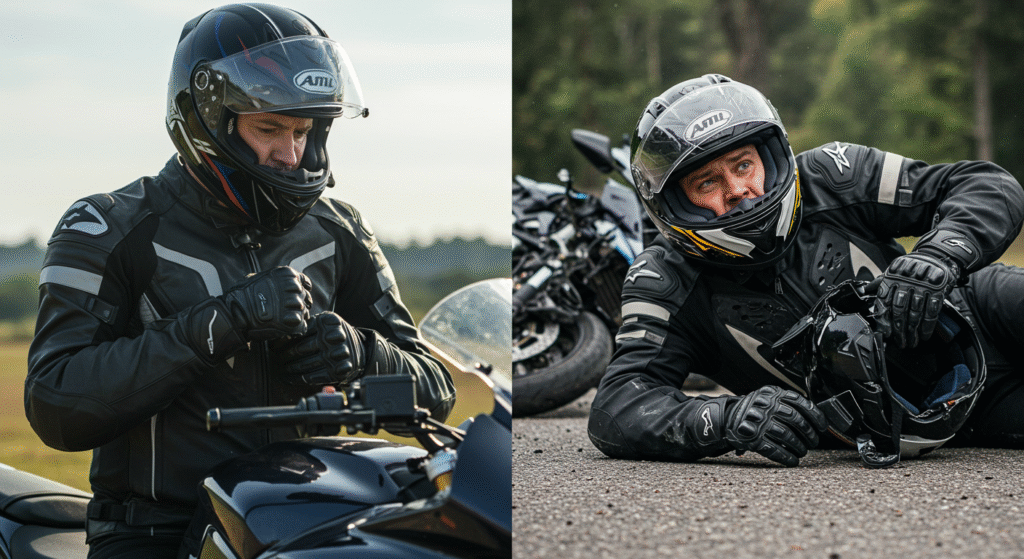
If you can call for help, give your location and describe what you are feeling. Tell the call handler if you hit your head, have neck or back pain, feel numb or weak, or are in immediate danger from traffic. Avoid unnecessary movement if you suspect a neck or spinal injury. Follow the call handler’s instructions about what to do next.
If you are helping another rider
- Speak to them and call for help early. If they do not respond, call 999 immediately or ask someone nearby to call. Tell the call handler whether the rider appears to be breathing normally.
- Follow instructions on breathing and CPR. If an adult is unresponsive and is not breathing normally, start CPR. The call handler can guide you. Tell them if the rider is wearing a helmet.
- Keep an injured rider still unless there is immediate danger or movement is essential to provide care. Leave their helmet in place unless removal is essential and you are trained to do it. Follow the call handler’s instructions about the airway and any movement needed.
- Report heavy bleeding and follow first-aid instructions. If it is safe to help, use a clean dressing or cloth to apply firm pressure to the wound. If something is embedded, leave it in place and apply pressure around it.
The immediate priorities for motorcycle crash survival are recognising danger, getting help and giving appropriate first aid. Keep the injured person warm and stay with them if it is safe. Tell the call handler if their breathing or level of response changes. See the Highway Code’s first-aid guidance.
Motorcycle Crash Survival After the Immediate Emergency
After a head injury at high speed, such as in a road collision, the NHS advises calling 999. It also advises calling 999 if someone has hit their head and cannot stay awake, has a seizure or develops weakness, numbness or problems with balance or speech. In England, contact NHS 111 for urgent advice if symptoms after a head injury concern you and there are no emergency signs. See the NHS head injury guidance.
Once the immediate medical needs are dealt with, arrange recovery for the bike if its condition is uncertain. A motorcycle that starts may still have damage that affects steering, braking or the tyres. If the helmet took an impact in the crash, stop using it and follow the manufacturer’s replacement guidance. Have damaged clothing, closures and protectors checked before using them again.
Motorcycle Crash Survival Training for Riders
Practise emergency braking and hazard response with a qualified instructor in a suitable environment. A trainer can explain how to build the skills on your own bike and give feedback as you practise. In Great Britain, the DVSA enhanced rider scheme is open to riders with a full motorcycle licence and covers defensive riding, hazard awareness and slow control.
First-aid training covers a different part of motorcycle crash survival. Biker Down, run by fire and rescue services, teaches riders about crash-scene safety, first aid and collision prevention. A session can help you get familiar with describing a location, identifying immediate risks and following instructions when someone needs help.
Make your motorcycle crash survival plan practical. Check that your kit fits, your bike is ready and you know how you would describe your location if you had to call for help. If you ride with friends, agree where to regroup if anyone gets separated. Those details are easier to settle before the engine is running.
Follow GHC Sportswear™ Retail on Facebook and Instagram.
Ride smart. Gear up. Know your CE.
Written by the GHC Sportswear™ Retail Team
Trusted by riders who want protection without the blah.