Why Riding Angry Can Be Dangerous: Motorcycle Safety Tips for Emotional Riders
Riding Angry: How to Stay Focused on a Motorcycle
Riding angry can start before you turn the key. You leave a difficult conversation, put your helmet on and find yourself replaying it at the first junction. It can also happen halfway through an otherwise ordinary ride, when a car pulls across you and you spend the next mile thinking about the driver.
If you are already angry before you leave, give yourself time to decide whether you can concentrate. If it happens on the road, create space around the bike, let the other vehicle go and look ahead to the next hazard. When you still feel too distracted to ride comfortably, find a safe place to park and take a break.
Why Riding Angry Can Change Your Decisions
Anger can give one thing more of your attention than it deserves. You might keep watching a van that pulled out in front of you while missing the queue building farther ahead. Or you might treat the next gap as an opportunity to get past the van before checking whether the road is clear.
Driving research offers some context. In a simulator experiment, Myounghoon Jeon and colleagues found that participants whose anger had been induced performed worse on the driving task than those in a neutral state. They also showed poorer awareness of what was happening around them. The experiment used a car simulator, so the findings concern driving performance in that setting.
For a motorcyclist, the practical question is where your attention goes after something upsets you. If riding angry means you are still watching the vehicle that passed you, you have less attention available for the traffic, junctions and road surface ahead.
How to Tell You Are Riding Angry
Look for changes in what you are doing. You might be closing gaps you would usually leave open, trying to pass a vehicle sooner than you normally would or focusing on its number plate after the immediate hazard has gone. You may also notice that you are gripping the bars more tightly or rushing the decisions you normally make with time to spare.
A quick test is to think about the next decision you need to make. Where is the next junction? What is the traffic ahead doing? Do you have room to slow down if it stops? If you keep going back to the argument or incident, that tells you something about what is occupying your attention.
Riding angry can feel different on different days. After a bad meeting, you may be distracted by a conversation nobody else on the road knows about. After a close call, you may have a specific vehicle in view. Recognising where the feeling came from can help you decide whether to take a break or simply give the traffic ahead more room.
How to Avoid Riding Angry Before You Set Off
Give yourself a moment before starting the bike. Put the keys down and finish what you need to do while you are still parked. That might mean making a call, checking your route or allowing more time to reach your destination. If you are still too distracted to follow the road comfortably, delay the ride or make another travel plan.
When you decide to go, complete your normal checks. See that the mirrors and visor give you a clear view, fasten your kit and secure anything you are carrying. The routine gives you a few practical jobs to finish before you join traffic.
You may enjoy riding to clear your head after a difficult day. To avoid riding angry, judge whether you are ready before you leave. A favourite road can still bring junctions, weather and other people’s mistakes. The ride will be there when you are ready to give it your attention.
What to Do if You Start Riding Angry in Traffic
Suppose a car changes lanes into your gap. Ease back as needed to restore your following distance and let the situation settle. Check what is happening ahead and to the sides before deciding where to go next. If there is a safe opportunity to pass later, make that decision based on the road you can see at the time.
Rule 147 of the Highway Code advises road users to avoid getting drawn into other people’s bad behaviour. It also advises holding back if someone pulls out across you. Give the vehicle space to move away and find somewhere safe to stop if you need to settle down. See Highway Code Rule 147.
When riding angry follows a close call, it can be tempting to make a point with a gesture or by catching up. The other driver may already be moving away. Let the distance grow and put your attention back on the road you are about to ride.
Take a break somewhere safe
Look for a suitable place to park, such as a service area or a car park. On a motorway, continue to the services or take a suitable exit for a planned stop. Once parked, take a few minutes and give yourself time to decide what you want to do next.
Check whether you are ready to rejoin traffic by thinking through the first part of the route. If your attention keeps returning to the same encounter, take more time. You may decide to shorten the ride, wait for the traffic to ease or continue once you feel able to concentrate again.
Make Group Rides Easier to Pause
If you are riding with friends, agree on places to regroup before setting off. That makes it easier to drop back or stop when you need to without worrying about catching up. A café, petrol station or other agreed parking spot gives you somewhere to meet once everyone gets there.
Riding angry can be harder to recognise when you are busy following a group. If the pace feels uncomfortable after a tense moment, keep a gap and ride at a speed that suits the conditions. You can tell the group what happened when you are all parked.
After the ride, try describing the incident in practical terms. A rider who says “I could only see the car when I got past the van” gives the group something specific to discuss. That can lead to a useful conversation about the view, the speed or how much space everyone had.
Set Up Your Bike and Kit Before You Ride
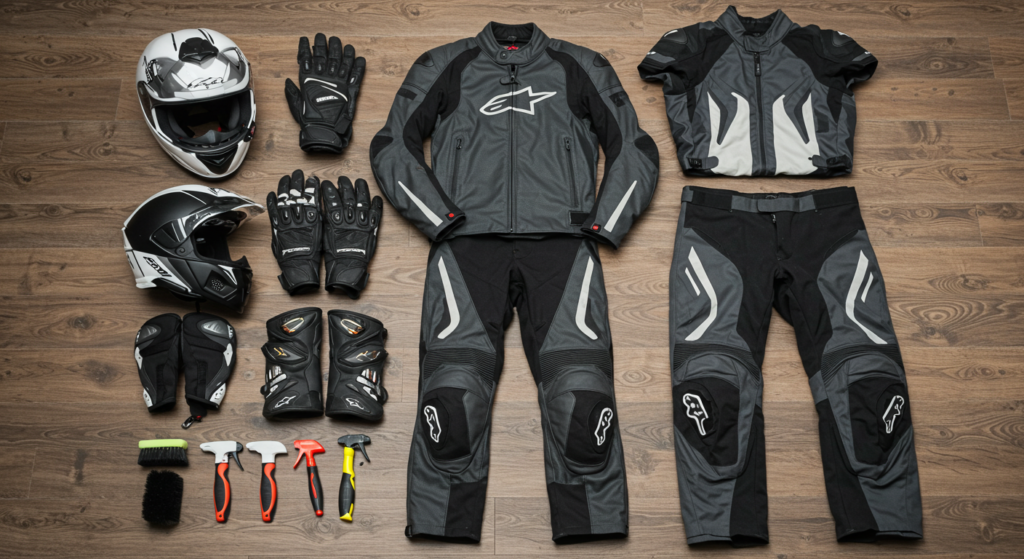
If a glove presses into your hand or your trousers pull across the knees, sort out the fit before you leave. Try your kit while seated on the bike. Check that you can reach the controls comfortably and that the armour stays over the intended areas when you bend your arms and knees.
Our men’s Kevlar® motorcycle jeans at GHC Sportswear™ Retail use 12 oz cotton denim, Kevlar® reinforcement at the seat and removable CE Level 1 knee and hip protectors. Stretch panels at the knees and waist help accommodate the riding position. Check the sizing and garment details before ordering.
The next time you catch yourself riding angry, notice the first decision that feels rushed. Give yourself enough space to make it at your usual pace. If you still need a pause, make the next safe parking place your destination.
Follow GHC Sportswear™ Retail on Facebook and Instagram.
Ride smart. Gear up. Know your CE.
Written by the GHC Sportswear™ Retail Team
Trusted by riders who want protection without the blah.