Motorcycle Rider Lingo Decoded: What Bikers Really Mean When They Talk
Motorcycle Rider Lingo: A Plain-English Guide for UK Riders
Motorcycle rider lingo can sound confusing until you hear it in context. A pillion is the passenger. A sweep rider brings up the rear of a group. And a quick spin might mean a short ride around town or a morning that ends at a café in the next county.
Most of these words are handy shorthand. A few are jokes, and others matter because they describe something you need to act on. If somebody says the bike is running hot, ask what the display is showing. If the ride leader says you will regroup, ask where.
Motorcycle Rider Lingo You’ll Hear on the Road
Some terms come up in rider training, while others are used to organise a group ride. This part of motorcycle rider lingo helps you understand who is doing what and where everyone is going.
| Term | What it means |
|---|---|
| Pillion | The passenger who rides behind the rider. You may also hear “pillion seat” or “pillion pegs”. |
| Filtering | Passing through or alongside queues of slow-moving or stationary traffic. The Highway Code advises riders to take care and keep their speed low when filtering. |
| Lifesaver | A brief shoulder check to look into a blind spot before committing to a manoeuvre when appropriate. |
| Sweep rider | The rider assigned to stay at the back of a group and look out for anyone who drops behind. Some groups call this rider the tail rider. |
| Regroup | Meet again at an agreed place if traffic or junctions split the group. |
On a group ride, agree on the route, stopping points and any hand signals before you leave. A gesture that makes sense to one group may be unfamiliar to someone joining for the first time. If the leader says “We’ll regroup at the petrol station”, find out which one before everyone puts their helmets on. See the Highway Code rules for motorcyclists.
Motorcycle Rider Lingo in the Workshop
Workshop terms describe what is fitted, how the bike has been set up or what someone noticed on the road. They are particularly useful when you are comparing used bikes or trying to explain a problem to a mechanic.
| Term | What it means |
|---|---|
| Stock | In factory specification. A seller might mean the whole bike or one part of it, such as the exhaust. |
| Modded | Modified from the original specification. Changes might include different bars, suspension or exhaust parts. |
| Dyno | Short for dynamometer, equipment used to measure output such as power and torque. “Dyno’d” means the bike was tested on one. |
| Open pipes | Informal shorthand for an exhaust with little or no silencing. Ask what system is fitted if you need the exact details. |
Motorcycle rider lingo can leave room for interpretation. If someone calls a bike stock, ask which parts have been changed and which original parts come with it. If they say it has been dyno’d, ask whether the run was a measurement or part of tuning work. The answer tells you more about the bike than the shorthand alone.
Motorcycle Rider Lingo From the Track
Track terms often turn up in race commentary, videos and chats about tyres. Once you know what they describe, the commentary becomes easier to follow.
| Term | What it means |
|---|---|
| Apex | The point on a cornering line where the rider comes closest to the inside of the turn. |
| Highside | A crash where the rear tyre slides, then abruptly regains grip, causing the bike to snap upright and potentially throw the rider. |
| Lowside | A crash where a loss of tyre grip causes the bike to fall onto its side and slide. |
| Chicken strips | Slang for the comparatively unused bands near the edges of a tyre. Riders sometimes joke about them as a measure of lean angle. |
A tyre’s edges tell you little about how well somebody reads a junction, manages a following gap or responds to a change in the weather. If motorcycle rider lingo turns into a competition over who has used more of their tyre, remember that the road still sets the pace. MotoGP’s glossary has more racing definitions.
When Motorcycle Rider Lingo Needs a Clear Answer
Descriptions like “twitchy” or “squirrely” tell you that the bike felt unsettled. Ask what the rider actually felt and when. Did the bars move over a bump? Did the bike feel different while braking? Did it only happen on one stretch of road? Those details give a mechanic more to work with.
“She’s running hot” deserves the same treatment. Ask whether a temperature warning appeared, the gauge was higher than usual or the rider simply noticed more heat. If a warning comes on or the bike’s behaviour changes unexpectedly, stop somewhere safe and check the handbook before continuing.
On the road, plain language is useful when you need someone to respond. “Gravel on the bend” gives the next rider a location. “I need to stop” tells the group what is happening. The same goes for a rider who is cold, tired or running low on fuel. A clear request gives everyone time to find a suitable stopping place.
The Café Talk and the Banter
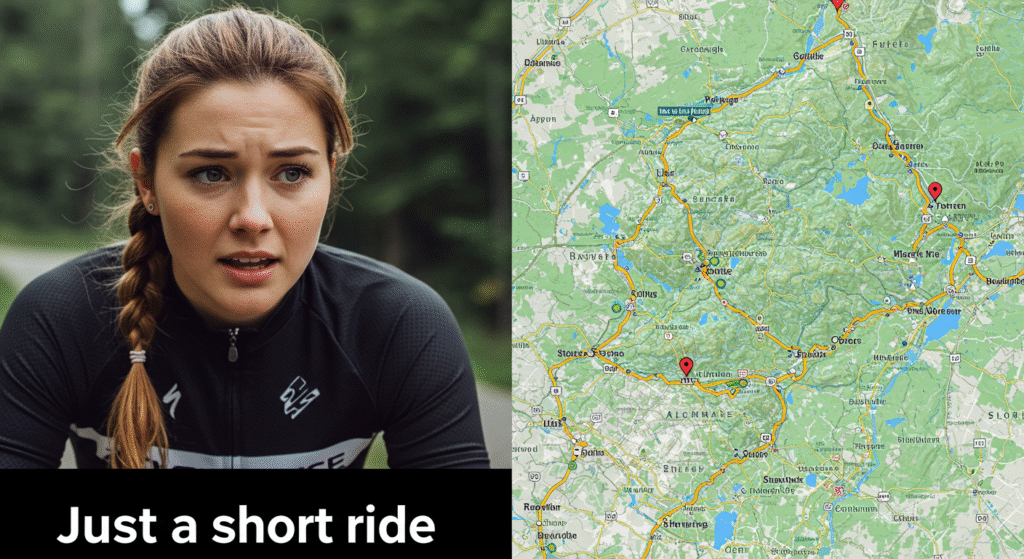
Some motorcycle rider lingo makes more sense over a cup of tea. “It’s got character” might be a fond description of an older bike. “I know the way” might be followed by a very scenic detour. If someone suggests “a quick spin” and you need to be back by noon, ask when they expect to return.
You might also hear cager, slang for a car driver, or squid, a disparaging term used for a rider seen as reckless. These are informal labels. In a conversation about a close call, describing what happened gives people more to go on than labelling the driver or rider.
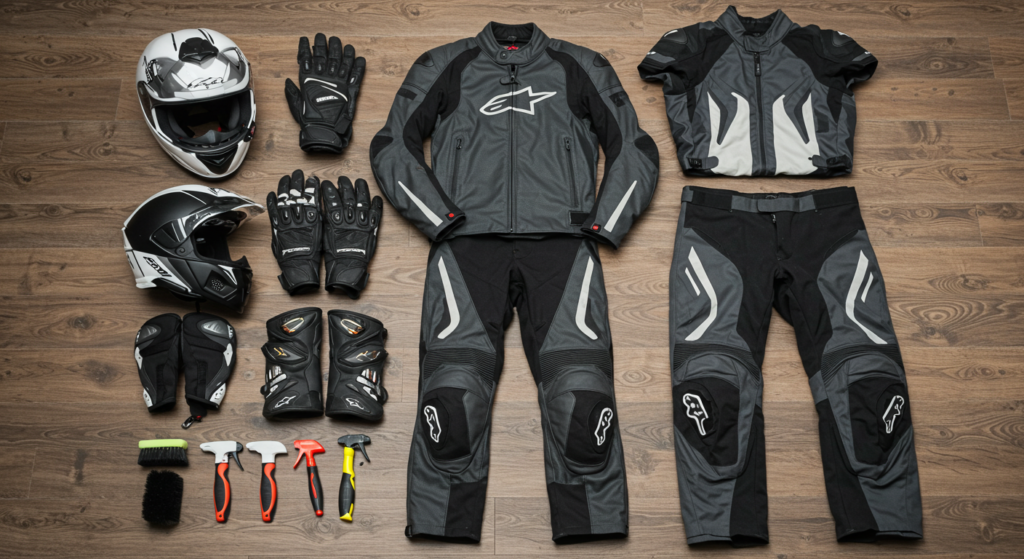
ATGATT is shorthand for all the gear, all the time. It expresses the habit of wearing protective kit even on short rides. If you hear it in a gear discussion, the useful follow-up is to ask how the person checks fit and what they look for on the labels.
Put the Gear Terms to Use
Motorcycle rider lingo often compresses several details into one phrase. When somebody says “CE-rated gear”, ask whether they mean the garment’s certification or the rating of an impact protector. The label and product information tell you what each rating applies to.
Our men’s Kevlar® motorcycle jeans at GHC Sportswear™ Retail use 12 oz cotton denim, with Kevlar® reinforcement at the seat and removable CE Level 1 knee and hip protectors. The Level 1 rating applies to the protectors. Check the product details for garment information and sizing.
The next time motorcycle rider lingo leaves you guessing, ask what the person means. A quick question can turn a vague description into something you can use, whether you are choosing a route, checking a bike or deciding what gear to wear.
Follow GHC Sportswear™ Retail on Facebook and Instagram.
Ride smart. Gear up. Know your CE.
Written by the GHC Sportswear™ Retail Team
Trusted by riders who want protection without the blah.