Reducing Plastic Waste in Motorbike Gear and Accessories
How to Reduce Plastic Waste in Motorbike Gear and Accessories
A cloudy visor, a worn cheek pad and a broken luggage buckle can each make a piece of kit frustrating to use. Sometimes the manufacturer sells a suitable replacement part. Sometimes the damage affects how the equipment protects you and it’s time to retire it. Knowing the difference can help reduce plastic waste in motorbike gear while keeping the kit you rely on fit for use.
Start with what you already own. Check what can be cleaned, which parts can be replaced and what the manufacturer says about repairs. When you need something new, ask about spares and look for specific information about recycled materials. Find out which part of the product the claim covers before you use it to compare two items.
Where Plastic Waste in Motorbike Gear Comes From
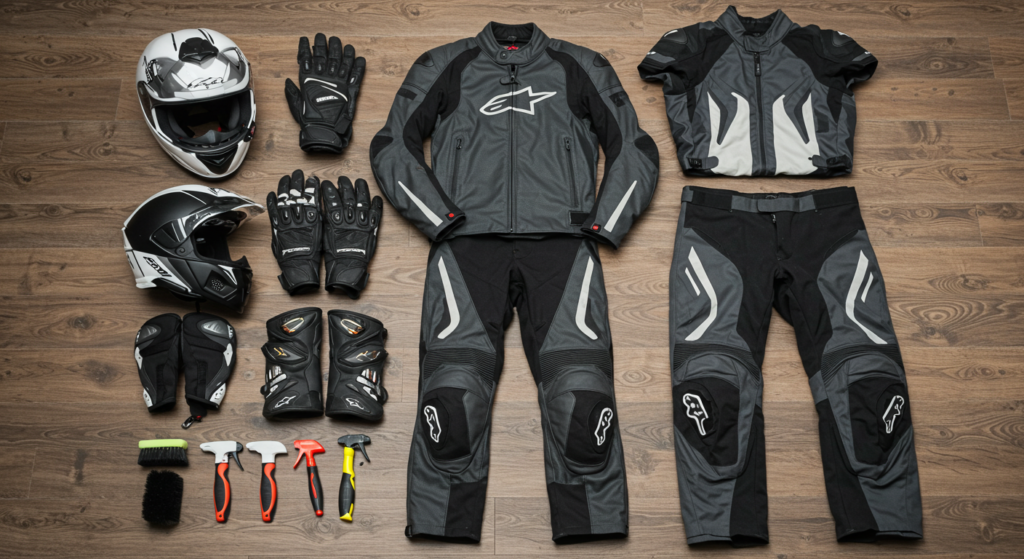
A textile jacket can contain synthetic fibres, waterproof layers, fastening components and impact protectors. A helmet combines parts with different jobs, from the visor you look through to the liner designed to absorb impact. At the end of its useful life, kit made from several materials can be harder to sort than the cardboard box it came in.
There’s also waste you can’t see. The European Environment Agency’s briefing on textile microplastics identifies the wearing and washing of synthetic textiles as a source of microplastic fibres. The briefing covers textiles broadly, so it gives context for synthetic riding kit without telling you how much a particular jacket sheds.
The best place to start reducing plastic waste in motorbike gear is with choices you can check. A compatible spare, a better fit or a repair may help you keep using something you’d otherwise replace. Our motorbike gear lifecycle guide looks at how decisions made at purchase carry through to disposal.
1. Buy Gear You’ll Use for the Riding You Do
A jacket can be well made and still spend most of its life on a peg if it fits badly over your usual layers. Before paying for another jacket or pair of gloves, think about what’s missing from the one you own. You might need a different cut, gloves that let you reach the switches more easily or weather protection that makes sense for your commute.
Buying for your usual ride is one way to reduce plastic waste in motorbike gear. For protective clothing, check the garment rating, which armour comes with it and how everything sits in your riding position. If you’re comparing gloves, check the standard for the exact model and try the wrist fastenings. Our motorcycle CE ratings guide explains the difference between a garment class and an impact protector rating.
2. Check Which Parts You Can Replace
Ask about replacement parts when you buy. For a helmet, that might mean a visor or model-specific comfort pads. For a bag, it could be a mounting strap or buckle. Check the part number and where to buy it. A component can be removable even when a replacement is hard to find. SHOEI’s parts catalogue shows how a manufacturer can list spares by helmet model.
Removable parts can make everyday care easier too. The GHC Sportswear™ Retail shop lists men’s Kevlar® motorcycle jeans with removable knee and hip protectors. Taking them out as directed lets you wash the jeans and follow the protectors’ care instructions separately. To reduce plastic waste in motorbike gear through replacement parts, check with the maker before swapping in a protector, liner or fastening. The replacement needs to fit and work with the item it goes into.
3. Maintain Kit and Get the Right Advice on Repairs
Start with the care label and manual. Use the cleaning method specified for the fabric, membrane or liner, and dry everything as directed before storing it. A quick clean may be all a dusty outer panel needs. A dirty lining may need to come out if the manufacturer allows it. Our motorbike gear maintenance guide covers what to check after a wet ride and before a full wash.
Repair can help reduce plastic waste in motorbike gear when the item can be returned to its intended condition. Ask the manufacturer or a specialist about a damaged zip, seam or armour pocket. Explain how the damage happened. A zip pull that came off after years of use is a different job from a jacket seam that split in a crash. Set damaged protective gear aside until it’s been assessed.
Helmets need their own decision. If your helmet took an impact while you were wearing it in a crash, replace it. For an empty helmet dropped onto a hard surface, see SHARP’s helmet replacement advice. A spare visor or comfort pad can address routine wear. A crash impact can damage parts of the helmet you can’t see.
4. What Recycled Content Tells You About Plastic Waste in Motorbike Gear
Look for a specific claim. A listing might identify recycled polyester in an outer panel or recycled paper in the packaging. That tells you where the material is used. If a brand describes the whole product as “eco-friendly”, look for information that explains what it means. The UK Competition and Markets Authority’s Green Claims Code checklist calls for evidence and clarity about the scope of environmental claims.
For plastic waste in motorbike gear, ask three questions. Which part contains recycled material? How much of that part is recycled? What happens when the item reaches the end of its life? A recycled-content figure describes what went into the item. A disposal instruction tells you what you can do with it later.
Use the same safety checks for any material. If a jacket uses recycled fibres, look for the tested rating of the finished garment. If a glove uses natural fibres, check the exact model’s protective standard. SATRA’s EN 17092 guide explains how garment construction is assessed, including seams and armour pockets.
5. Cut Waste From the Accessories You Use Often
Some of the simplest ways to reduce plastic waste in motorbike gear and accessories start with things you already own. Refill your water bottle and carry it securely in your luggage. If a luggage mount needs replacing, check whether you can get the correct strap or fitting on its own. Our motorbike accessories guide covers what to check when fitting and loading a tank bag.
Keep packaging you can use for a return or for posting something else. Sort the rest by material and check local instructions. Some plastic bags and wrapping are accepted at collection points, and household collections vary. Recycle Now’s plastic wrapping guide explains which items to check for and where to find collection points.
When sorting a delivery, separate the box, film and rigid inserts. A recycling instruction on the cardboard may apply only to the box. If you’re trying to cut plastic waste in motorbike gear deliveries, that gives you something specific to ask the retailer. Could it use one less layer of wrapping while still protecting the item in transit?
6. Check Local Options for Plastic Waste in Motorbike Gear
Plastic waste in motorbike gear can be awkward to deal with at the end of its life. A jacket may have textile panels, a bonded membrane, metal fastenings and foam protectors. Check whether the operator of your local textile bank accepts the complete garment before dropping it off. Recycle Now’s clothing and textiles guide can help you find local services to ask.
For a retired motorcycle helmet, follow SHARP’s advice to dispose of it as general refuse and check your council’s arrangements. Keep the helmet out of reuse. If a shop advertises a take-back service for other riding kit, ask what it accepts, what condition the items need to be in and what happens to them after collection.
If a jacket no longer fits, check its condition and history. For sound clothing with a known history, a charity or reuse scheme that accepts motorcycle clothing may be an option. Set damaged protective kit aside for assessment or disposal. When you’re trying to reduce plastic waste in motorbike gear, the next step depends on both the condition of the item and what the receiving service accepts.
7. Ask Retailers About Spares, Repairs and Packaging
Retailers can make it easier to reduce plastic waste in motorbike gear by listing compatible spares, explaining repair options and identifying packaging materials. Before ordering, ask whether spare parts are stocked locally and whether the item can ship with less wrapping. Use the sizing chart and ask for measurements if you’re between sizes.
When comparing retailers, ask about the parts you’re most likely to need later.
- For a helmet, check the availability of model-specific visors and comfort pads.
- For protective clothing, ask about compatible protectors, care instructions and what the manufacturer can inspect or repair.
- For luggage, check whether straps, clips and mounts are available separately.
- For packaging, check which parts you can reuse and which your local collection accepts.
A Practical Start for Reducing Plastic Waste in Motorbike Gear
Pick one item you’d otherwise replace and find out what it needs. Clean it as directed, order a compatible spare if one is available or get the damage assessed. If it has reached the end of its useful life, check the correct disposal route. Reducing plastic waste in motorbike gear starts with making that decision for the kit you already have.
Follow GHC Sportswear™ Retail on Facebook and Instagram.
Ride smart. Gear up. Know your CE.
Written by the GHC Sportswear™ Retail Team
Trusted by riders who want protection without the blah.