Sport bike vs Cruiser Riders: Inside the Great Motorcycle Culture Clash
Sport Bike vs Cruiser: Riding Position, Comfort and Culture
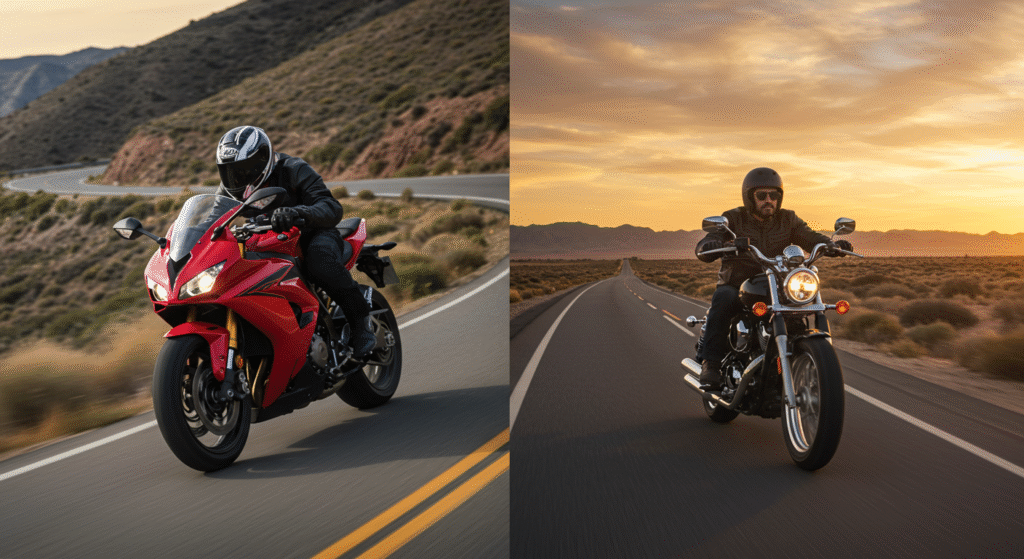
The sport bike vs cruiser choice often becomes clearer when you sit on both. On many sport bikes, you lean towards the bars with your knees bent and your feet drawn back. A cruiser typically gives you a lower seat and a more relaxed upper-body position. The exact reach to the bars and foot controls varies enough that two bikes in the same category can feel quite different.
Think about where you would use the bike. A short commute with tight parking, a Sunday on winding A-roads and a weekend away with luggage all ask different things of the same machine. How you sit, how easily you move the bike and how comfortable you feel after an hour give you more to work with than the label on the tank.
Sport Bike vs Cruiser at a Glance
A sport bike generally puts more emphasis on steering response and cornering clearance. A cruiser usually has a lower stance, with the bars and seat arranged for a less forward lean. Those design choices affect what you notice at a standstill, through town and on a longer stretch of road.
| Feature | Sport bike | Cruiser |
|---|---|---|
| Riding posture | Often a forward lean with more bend at the knees | Often upright or slightly reclined |
| Handlebars | May use low clip-ons or higher bars on road-focused models | Often wider or swept back towards the rider |
| Foot controls | Often set farther back | May sit in the middle or further forward |
| Seat and ground reach | Often a higher seat. Seat width also affects reach | Often a lower seat. The shape still matters |
| Wind protection | A fairing and screen are common, with coverage varying by model | Some have a screen or fairing. Others leave the rider exposed |
If you are weighing up sport bike vs cruiser for the first time, use the table to decide what to check in person. A spec sheet can tell you the seat height, but sitting on the bike shows you whether your knees feel cramped, the bars are within comfortable reach and your feet can find the controls.
Sport Bike vs Cruiser Riding Position and Comfort
Handlebars, seat and footpegs form what riders call the rider triangle. Changing the distance between any of those points can shift how much you bend at the knees and hips or how far you reach with your arms.
On a sport bike, low bars and rearward pegs can put you in a more tucked position. You may enjoy that position on open roads and feel the reach more in slow traffic. Some road-focused sport bikes use higher bars, so the posture can be much less demanding than it looks in a photo.
A cruiser’s low seat can make it easier to reach the ground when stopping. Forward controls can give some riders more room at the knees, while others prefer pegs nearer the middle of the bike. Try reaching the brake and gear lever while seated. Comfort in the sport bike vs cruiser comparison depends on how those controls line up with your proportions.
What two Honda models show
Honda lists an 810 mm seat height and 211 kg kerb weight for its 2026 CBR650R E-Clutch sport bike. The 2025 CMX500 Rebel cruiser has a 690 mm seat and weighs 191 kg at the kerb. The Rebel in this comparison is both lower and lighter.
Those figures illustrate why the exact model matters. The weight difference in this sport bike vs cruiser pairing could be noticeable when you are backing into a parking space. The seat figures tell you how high you sit, while the width of the seat and the distance to the bars still need a look in person.
Sport Bike vs Cruiser in Everyday Riding
On a quiet test ride, almost any position can feel manageable for ten minutes. Use a route that resembles your own riding if the dealer allows it. Include a few ordinary turns, a stop and a stretch where you can settle into a steady speed. Pay attention to how the bike feels during the parts of the ride you would repeat every week.
Commuting and parking
For daily town use, check how easy it is to see around you, reach the controls and manoeuvre the bike slowly. Think about where you park at home and work. Backing out of a sloping drive or turning in a small garage may be more important to your sport bike vs cruiser choice than a difference in engine power.
A low seat can help when putting a foot down. Steering lock, bar width and how the bike carries its weight also matter when space is tight. Check those details on the models you are considering, especially if you regularly move your motorcycle with the engine off.
Weekend roads and longer rides
On winding roads, you may prefer the forward position of a sport bike or the more upright feel of a cruiser. See how comfortably you can look through a bend and reach the bars and foot controls. A short test ride can tell you whether the position suits you before you start thinking about longer days.
For touring, the sport bike vs cruiser question includes wind protection, luggage and passenger space. A compact sport bike fairing and an upright cruiser screen can direct air differently around your shoulders and helmet. Check what is fitted to the actual bike. If you travel with a pillion or need luggage, look at the seat, available mounting options and the manufacturer’s load limits.
Sport Bike vs Cruiser Culture at the Café Stop
Rider groups can develop their own habits. Some spend the café stop talking about suspension, tyres or their next track session. Others compare routes, swap stories about custom parts or discuss where to stop for lunch. The same group can do all of that on one ride.
Sport bike vs cruiser banter often starts with what you can see in the car park. Fairings, footboards and riding kit give people something to joke about, but the bikes reveal little about why each person turned up. A sport bike rider might use their bike for a daily commute. A cruiser owner might have spent years riding on track before choosing a different position for the road.
What helps on a mixed group ride
Agree on the route and a few places to regroup before you set off. That makes it easier for each rider to travel at a pace that suits the road and conditions. If someone misses a turn or gets separated at a junction, they know where they can rejoin the group.
Once you stop, asking how someone uses their bike usually gets a better conversation going than comparing category labels. You may hear why a lower seat made a difference after a move to a house with a steep drive, or why someone likes a sport bike with higher bars for their commute.
Choosing Riding Gear for Either Bike
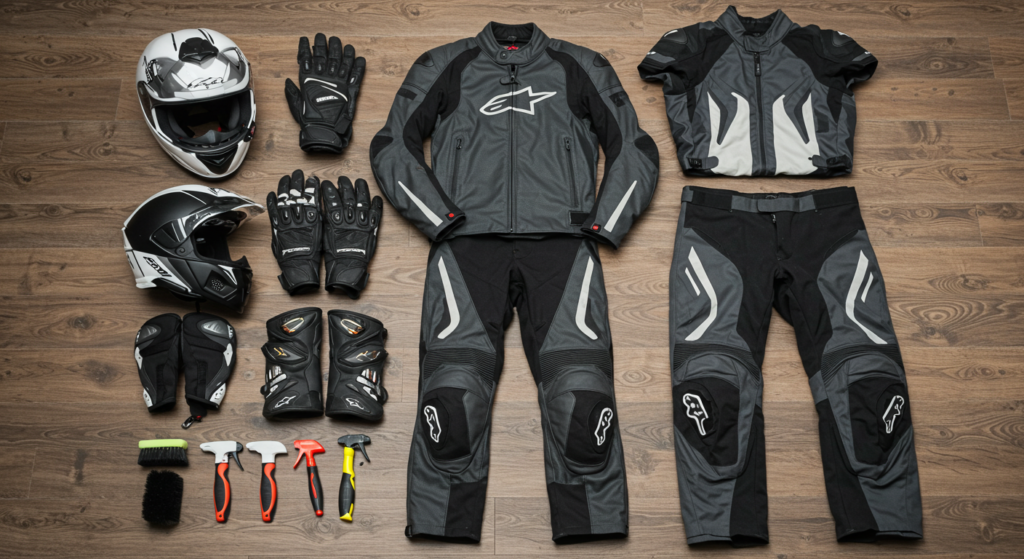
The sport bike vs cruiser choice changes how your kit sits on you. On a bike with higher or rearward pegs, check whether your trousers pull across the knees when your legs are bent. On a cruiser, see where the knee protectors sit when your feet are on the pegs or footboards. Check the waist and ankle coverage in the position you actually use.
At GHC Sportswear™ Retail, our men’s Kevlar® motorcycle jeans use 12 oz cotton denim, with Kevlar® reinforcement at the seat and removable CE Level 1 knee and hip protectors. Stretch panels at the knees and waist help accommodate the riding position. Use the product page to check the sizing and construction details.
If the sport bike vs cruiser decision is still open, try both in the kit you usually wear. Pay attention to how easily you reach the controls, how the bike feels when you park and whether the position stays comfortable at the pace you normally ride.
Follow GHC Sportswear™ Retail on Facebook and Instagram.
Ride smart. Gear up. Know your CE.
Written by the GHC Sportswear™ Retail Team
Trusted by riders who want protection without the blah.