Why Motorcycle Riders Swear in Their Helmets: A Universal Language on Two Wheels
Motorcycle Rider Emotions: Why Riders Swear in Their Helmets
A car moves across your lane. You ease back to give it room, then hear yourself mutter a few choice words inside your helmet. That brief reaction can capture several motorcycle rider emotions at once. You might be startled by the movement, annoyed that it happened and relieved that you had enough space to respond.
Swearing is one way riders express those feelings. Some go quiet after a close call. Others laugh once the immediate danger has passed. The useful thing to notice is what happens next. If you find yourself watching the driver who cut across you instead of the traffic ahead, the incident is still taking up your attention.
What Motorcycle Rider Emotions Feel Like on the Road
Think about a ride that starts in town and ends on a quiet stretch of road. In traffic, you might be watching for car doors, pedestrians or drivers changing lanes. A few miles later, you have a clearer view and room to settle into a steady pace. How you feel can change as quickly as the road around you.
A swear word can come out of frustration, but it can also express surprise or relief. A pothole you see late might draw a sharp exclamation. The first dry stretch after an hour in the rain might get a cheer. These motorcycle rider emotions can surface minutes apart on the same journey.
Context helps explain motorcycle rider emotions. The pothole might have startled you because you spotted it late. The relief at the end of the rain might have more to do with being able to see clearly through the visor again. You can usually describe the experience more precisely once you have parked.
Why a reaction can feel private inside a helmet
When you ride alone, there may be nobody close enough to hear a muttered comment. The remark can be as fleeting as something you say to yourself when you miss a turn or finally reach a familiar road. There is no audience to explain it to.
Other riders may recognise the feeling when you tell the story later. While you are on the road, though, it is hard to tell what someone else is thinking from a helmet movement or hand gesture. A rider turning their head might be checking traffic. Give the people around you room and respond to what you can actually see.
What Research Says About Swearing and Stress
In a 2009 experiment, Richard Stephens, John Atkins and Andrew Kingston asked participants to repeat a swear word or a neutral word while holding a hand in icy water. In the swearing condition, participants generally tolerated the cold for longer and reported less pain. Their heart rates also rose.
The study is sometimes brought into discussions about motorcycle rider emotions, but it measured pain tolerance in a laboratory. Questions about how swearing affects motorcycle control, anxiety in traffic or consciousness after a crash would require separate research.
Does letting off steam help?
When motorcycle rider emotions run high, a quick exclamation can pass in a second. Replaying an argument can keep your attention on it for the rest of the ride. In a 2002 study, psychologist Brad Bushman found that people who hit a punching bag while thinking about the person who had angered them reported more anger than people in comparison groups. Participants who focused on the provocation were also more aggressive in a subsequent lab task.
On a ride, one way to use that distinction is to notice where your attention goes after a stressful moment. You may swear once and move on. If you keep replaying the incident or watching for a chance to catch up with the other vehicle, take that as a reason to give yourself space and reassess how ready you feel to continue.
Managing Motorcycle Rider Emotions After a Close Call
Picture a driver entering a roundabout as you approach. Your immediate job is to respond to the traffic and keep the bike under control. Once the situation has settled, you may still feel shaky or annoyed. A reaction that outlasts the immediate hazard can affect what you pay attention to next.
Leave space between yourself and the other vehicle. Look ahead for the next junction, crossing or change in traffic. If you are still replaying the moment or feel too shaken to concentrate, find a safe place to park and take a break before continuing. On a motorway, use a service area or leave at a junction for a planned stop.
Motorcycle rider emotions can be easier to make sense of once you are stationary. At a stop, you can ask yourself whether you were mainly startled, angry or worried about the bike. If you noticed a change in how the motorcycle felt after hitting a pothole, deal with that observation before deciding whether to set off again.
Give yourself room when another driver frustrates you
Rule 147 of the Highway Code advises road users to avoid getting drawn into someone else’s bad behaviour. If you need to settle down, find somewhere safe to stop and continue when you feel ready.
In practice, that can mean letting a vehicle move further ahead while you restore your following distance. A driver who has already passed you requires less of your attention than the people approaching the next junction. Give yourself time to see what is happening there.
How Comfort Affects Motorcycle Rider Emotions
After an hour of riding, a glove seam pressing into your hand or a collar rubbing against your neck can become hard to ignore. If rain or wind is making you uncomfortable as well, an ordinary delay may feel more frustrating than it did at the start of the trip.
At the next suitable stop, work out whether there is something you can adjust. A bunched layer may need smoothing out. A visor that is dirty or wet may need attention. If something about your kit repeatedly bothers you in the same riding position, check the fit when you are back home.
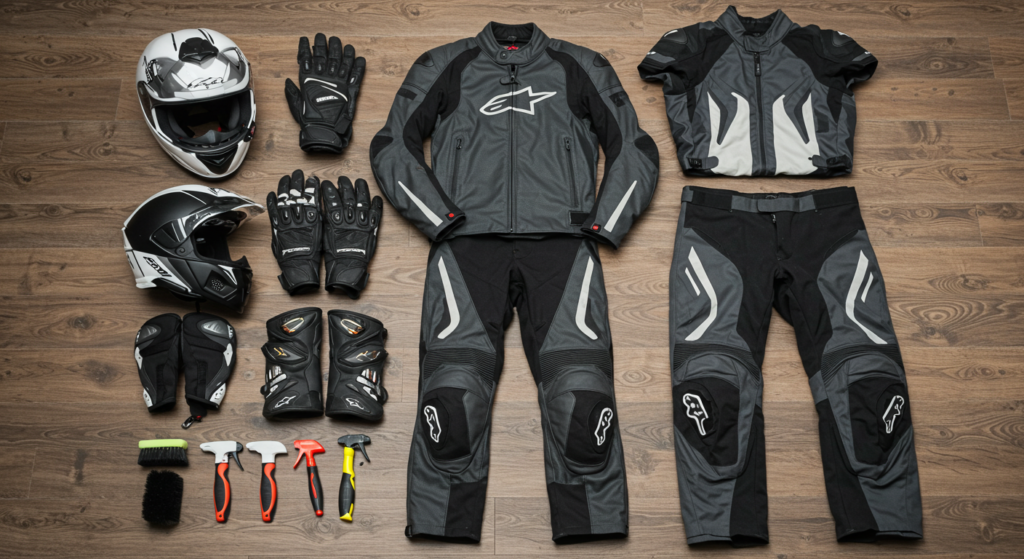
When you try riding trousers, sit in the position you use on the bike and check how the knees and waist feel with your legs bent. Our men’s Kevlar® motorcycle jeans at GHC Sportswear™ Retail use 12 oz cotton denim with Kevlar® reinforcement at the seat, stretch panels at the knees and waist, and removable CE Level 1 knee and hip protectors.
Talking About Motorcycle Rider Emotions After the Ride
A café stop or a conversation at home gives you time to tell the story at your own pace. That can be the point when the missed turn becomes funny or you realise what made a particular junction uncomfortable.
When discussing a near miss, try describing what you saw and when you saw it. “A van blocked my view of the junction until I got closer” gives a riding partner something concrete to talk through with you. They may remember how the road looked from their position or help you identify what made the situation difficult to read.
Conversations about motorcycle rider emotions also have room for the good moments. You might remember laughing at how wet you got, or grinning after a quiet stretch of road that made the whole ride worthwhile. Those reactions belong in the story just as much as the swear word you muttered in traffic.
Whether you swear aloud or go quiet, motorcycle rider emotions can tell you what is still on your mind. If the incident stays with you, take time to talk it through once the bike is parked.
Follow GHC Sportswear™ Retail on Facebook and Instagram.
Ride smart. Gear up. Know your CE.
Written by the GHC Sportswear™ Retail Team
Trusted by riders who want protection without the blah.