Winter Riding Tips: How to Stay Warm and Safe on Your Motorbike
12 Winter Motorcycle Riding Tips for UK Riders
A winter commute can start on a wet main road and end on a shaded side street where frost is still on the ground. The return journey may be colder, darker and windier than the ride out. These winter motorcycle riding tips cover what to check before you leave, how to stay warm enough to use the controls comfortably and when to change your plans. Start with the whole route, including the last few streets and the time you expect to head home.
1. Winter Motorcycle Riding Tips Start With the Forecast
Before you put on your helmet, check the Met Office weather warnings and the local forecast for your departure, destination and any higher or exposed stretches between them. Look at the return window too. Rain in the afternoon followed by falling temperatures can change the decision you made in the morning.
The Highway Code’s winter guidance advises against travel in snow or ice unless the journey is essential. If you expect either on your route, postpone a leisure ride and reconsider how you’ll make an essential trip. A clear road outside your house tells you little about a shaded hill several miles away. If you’re using these winter motorcycle riding tips for a regular commute, check the coldest stretch before deciding to ride.
2. Plan Around Daylight, Road Closures and Warm Stops
Build these winter motorcycle riding tips into your route before accepting the sat nav’s fastest option. A shortcut along an exposed lane may add more uncertainty than it saves in time. Check for closures, consider which roads are more likely to have been treated and choose a place to stop that’s open when you’ll arrive. The government’s traffic information directory points riders to road updates for the UK nations.
If you’re riding for pleasure, choose a shorter loop with a straightforward way home from a junction or town. If you’re commuting, leave time to change course or stop somewhere sheltered. A later start can give you more daylight and, on some days, time for temperatures to rise. Check the forecast for the return trip before shifting your plans.
3. Layer Up Without Restricting Movement
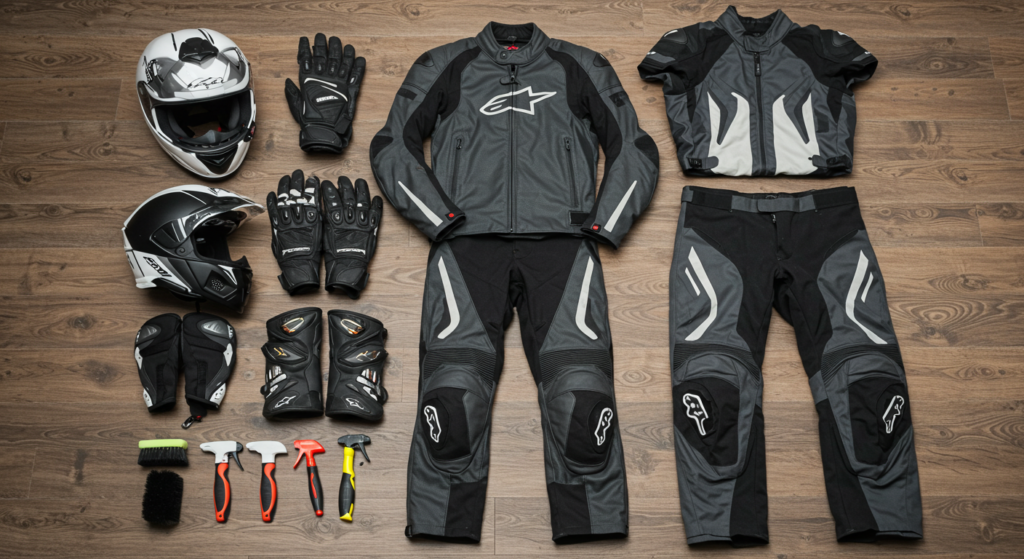
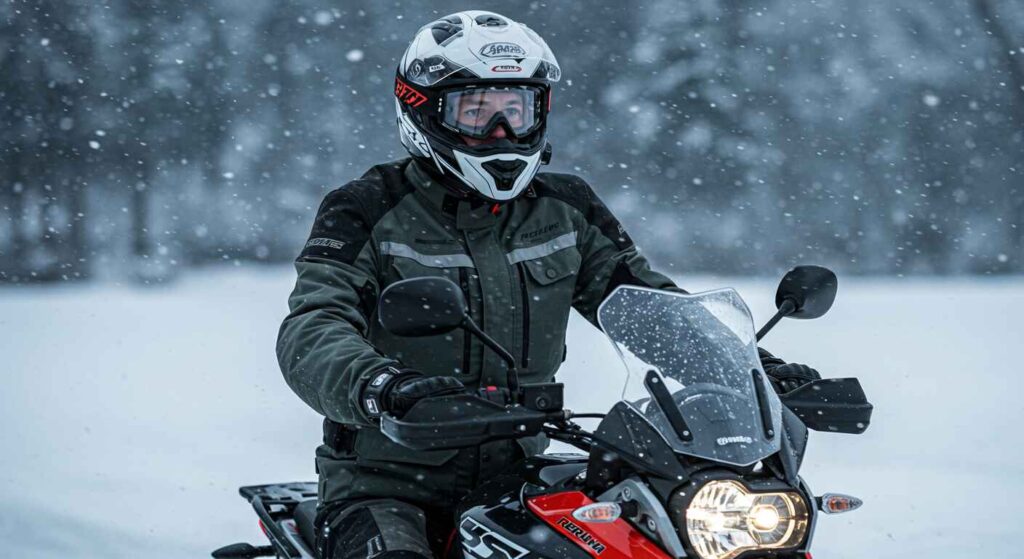
Layering is one of the winter motorcycle riding tips you can try at home. Start with a close-fitting base layer that moves moisture away from the skin. Add a fleece or another insulating mid-layer, then wear protective riding gear with weather protection suited to the forecast. If you use separate waterproofs, check that they fit over the protective kit you normally wear.
Try the whole outfit in your riding position. Turn your head for a shoulder check, bend your knees and reach for the controls. A thick mid-layer that pulls across the shoulders, a collar that catches on the helmet or trousers that feel tight behind the knees are easier to sort out before you leave. Pay particular attention to where jacket cuffs, gloves, trouser hems and boots overlap. Small gaps can let wind or rain in over a longer ride.
4. Keep Your Hands and Feet Warm Enough to Use the Controls
When you try out these winter motorcycle riding tips, pay attention to how your hands feel at the levers. Try insulated gloves with the jacket you’ll wear and check that you can operate the clutch, front brake and switches comfortably. Make sure you can fasten the wrists and tuck or overlap the cuffs as the design allows. Our guide to riding gloves and hand protection covers fit, grip and protective features.
Heated grips can make a cold ride more comfortable, while heated gloves are another option if your fingers get cold quickly. For your feet, leave enough room in your riding boots to move your toes after adding thermal socks. If your fingers get too cold to use the controls normally, pull over somewhere safe and warm up before deciding whether to continue.
5. Winter Motorcycle Riding Tips for Pre-Ride Checks
A few minutes on the drive can reveal a low tyre, a failed brake light or a weak battery before you’re relying on the bike in poor weather. These winter motorcycle riding tips are especially useful when the bike has been parked for several days or the temperature has dropped since your last ride.
- Tyres. Follow Michelin’s tyre pressure guidance and use the motorcycle manufacturer’s recommended cold pressures for your load. Check the tread and look for cuts, bulges or other damage.
- Lights. Check the headlight, rear light, indicators and brake light. Test that the front and rear brake controls each operate the brake light.
- Battery and fluids. If the bike has been sitting, check how it starts and use a compatible battery maintainer if the manufacturer recommends one. Follow the handbook for oil grade, coolant and other fluid checks.
6. Winter Motorcycle Riding Tips for Wet Roads
Leave a bigger gap in moving traffic, allow more time to slow down and use the brakes, throttle and steering smoothly. Of these winter motorcycle riding tips, making space is particularly useful in heavy spray, when it can be harder to see brake lights and the road surface ahead. Do most of your slowing before a bend so you enter at a speed that suits the grip and the distance you can see.
The Highway Code advises allowing at least twice the stopping distance in wet weather compared with dry roads. On ice or snow, stopping distances can be ten times greater. The Northern Ireland Highway Code gives the same guidance. Leave more space when the roads are wet, and reconsider the journey if ice or snow is expected.
7. Read the Road Ahead for Local Hazards
Some winter motorcycle riding tips matter most on roads you know well. A shaded bend, a bridge deck or an untreated side road may still be slippery when the main route looks clear. Watch for wet leaves, mud washed across the road and loose grit near junctions. In rain, painted markings and metal covers also warrant extra care, particularly when you’re turning.
Give yourself room to see the road surface ahead and adjust your speed early. If a stretch appears icy or flooded, look for a safe place to stop or change route. Think through the last turn into your destination too. A short, steep access road can be the most difficult part of an otherwise straightforward ride.
8. Winter Motorcycle Riding Tips for a Clear Visor
A visor can start to mist as you slow down or wait at traffic lights. Clean it with products approved by the helmet manufacturer and check the vents before you set off. If your visor accepts a Pinlock® insert, follow the manufacturer’s fitting and care instructions and check any restrictions on night use.
The visor checks in these winter motorcycle riding tips are worth doing before the ride home too. A visor that looks clear in daylight can be harder to see through when headlights catch dirt or scratches. If your view deteriorates while you’re riding, find a safe place to pull over and sort it out before continuing. Our motorbike gear maintenance guide covers visor care alongside the checks that help keep winter kit usable.
9. Make the Bike Easier to See
Winter motorcycle riding tips for visibility start with clean lights. Spray can leave a film over the lenses, especially on a longer commute, so check them when you stop. Highway Code Rule 86 recommends reflective clothing or strips after dark and says dipped headlights may make riders more conspicuous, even in daylight.
Look at your kit with your usual backpack or luggage fitted. A bag can cover reflective panels on the back of a jacket. At junctions, allow for the possibility that a driver is looking through a rain-streaked window or into low sun. Keep enough space and time to respond if a vehicle pulls out.
10. Plan Breaks Before You Get Cold or Tired
For a longer trip, use these winter motorcycle riding tips to plan where you’ll stop as well as how far you’ll ride. Choose somewhere you can get indoors, take your gloves off, have a drink and check the latest conditions. It’s easier to assess how cold or tired you are once you’re off the bike and out of the wind.
Pack for the possibility that the ride takes longer than planned. Our motorbike accessories guide covers everyday items such as luggage and first-aid kits. For a cold-weather ride, useful additions include a dry spare pair of gloves, a warm layer and a charged phone. Keep what you may need at a stop accessible without unpacking the whole bike.
11. Share Your Route and Set Up Navigation Before Moving
These winter motorcycle riding tips are particularly useful if you’re heading out alone. Let someone know where you’re going and when you expect to arrive. If you change your route or stop because conditions have deteriorated, send an update once you’re parked safely. Keep breakdown details somewhere you can get to easily, and download the route if you expect patchy signal.
Set up navigation before leaving and pull over if you need to change it. On faster roads, spray and traffic already demand your attention. Our motorway riding guide covers how to manage distractions and keep your attention on the traffic ahead.
12. Decide in Advance What Would Make You Turn Back
Use these winter motorcycle riding tips to decide before you set off what would make you turn around or wait somewhere warm. That could be frost on an untreated stretch, a visor that keeps misting or fingers that feel too stiff to work the levers normally. Agree on that option before departure if you’re riding with others, so everyone knows they can call for a stop.
For your first cold-weather outing, try these winter motorcycle riding tips on a short, familiar route in daylight, when the roads are clear. That gives you a chance to see how your layers, gloves and visor work together before committing to a longer journey. If you want to build your riding skills, arrange a session with a qualified instructor in suitable conditions.
Put These Winter Motorcycle Riding Tips into Practice
Before your next ride, check the route for the trip home as carefully as you check the way out. Try your layers together, look over the bike and pick a warm stop you can reach early. On a clear winter day, those checks leave you free to enjoy the ride. If ice, snow or poor visibility changes the plan, give yourself the option to wait.
Follow GHC Sportswear™ Retail on Facebook and Instagram.
Ride smart. Gear up. Know your CE.
Written by the GHC Sportswear™ Retail Team
Trusted by riders who want protection without the blah.