Biker Funerals and Memorial Rides: Rituals of Respect and Farewell
Biker Funerals and Memorial Rides — Practical Ways to Help
A motorcycle can hold a great deal of someone’s history. It might be the bike they spent years restoring, the one they rode to work in all weathers, or the one their friends could recognise by sound alone. When a rider dies, including a motorcycle in the farewell can give family and friends a familiar way to remember them.
Biker funerals and memorial rides give people two ways to do that. At a funeral, motorcycles can form part of the service or the journey to it. A memorial ride gives people a separate opportunity to gather, often on a route that meant something to the rider. For either event, start by asking what the family would welcome and how involved they want to be.
How Biker Funerals and Memorial Rides Differ
A biker funeral follows the arrangements the family makes for the service. The motorcycle element might be a photograph on the order of service, a bike parked outside with the venue’s permission, or a small escort following the hearse. The family may also have religious or cultural customs they want to observe. Ask the funeral director or person leading the service how the motorcycle tribute can fit around those plans.
A memorial ride can happen weeks or months later, when people have more time to plan. It might end at a café the rider liked, a club meeting place or a hall with room for people who arrive by car. A separate date can also give friends who couldn’t attend the funeral a chance to take part. Ask the family whether they want a private gathering or an invitation that can be shared publicly.
Motorcycles, Club Colours and Other Funeral Tributes
The motorcycle hearse and riding escort
Some families choose a specialist motorcycle hearse. Depending on the provider, the coffin can travel in a purpose-built sidecar or a hearse towed by the motorcycle. Ask the funeral director what’s available, how it affects timing and whether the route can pass a meaningful place. Both the transport and the route can be personalised as part of the funeral procession.
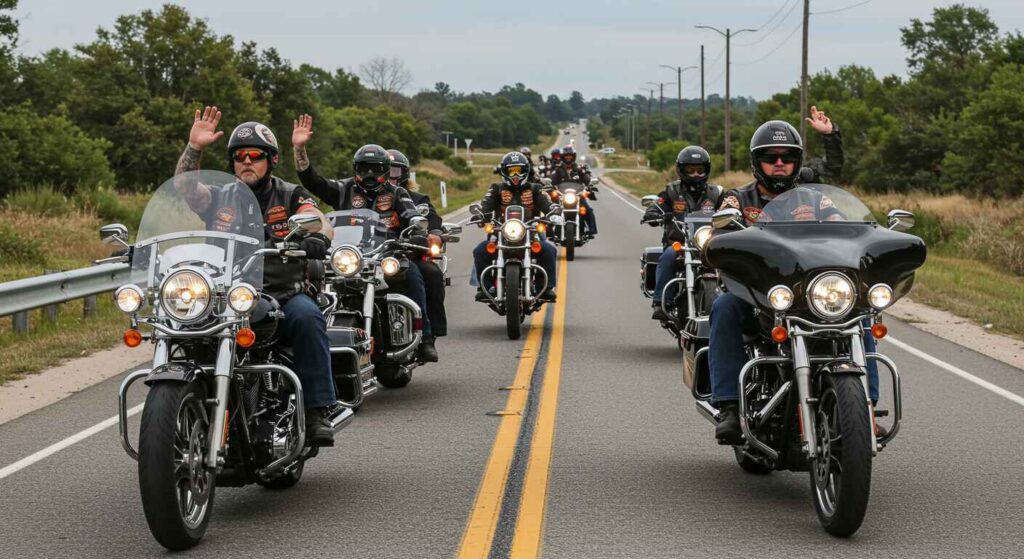
If friends want to accompany the hearse, give the funeral director an estimate of how many bikes will join. Agree where they’ll assemble, where they’ll ride in relation to the hearse and family cars, and where they’ll park at the venue. A few designated riders may be easier to accommodate than everyone joining at once. Others can meet the procession at the service or pay their respects at a later ride.
Club colours, patches and quiet moments
Club customs vary. Members may wear their colours, line the entrance or offer the family a patch to keep. Ask the club what it usually does and the family which elements they’d like included. If their preferences differ, the club can hold its own remembrance separately. The meaning of colours and patches also varies across biker subcultures.
A final engine rev is another tribute some families choose. Discuss it beforehand with the family, funeral director and venue, including when it would happen and where the bikes could stand safely. A moment of silence can fit the same place in the service. At a venue with other funerals that day, even a short engine tribute may need to happen at a different time or location.
Planning Biker Funerals and Memorial Rides Around the Family
Agree on a single point of contact so the family has someone to call if plans change. For the funeral, that might be the funeral director or a friend nominated by the family. For the ride, one organiser can handle messages and give everyone the same information. Share only the details the family has agreed to make public, including names, photographs and the service location.
An invitation should say when to arrive, where to park, how long the ride is expected to take and whether people can come straight to the gathering afterwards. Include a number for someone who can answer practical questions on the day. If there’s a private service and a public gathering, make that distinction clear so visitors know where they’re welcome. Ask before posting photographs of the funeral or close family members.
Think about people who cannot ride or stand outside for long. Check seating, accessible parking and toilets at the finish. If the route passes a place the family wants to see, arrange a comfortable way for them to join that part of the day. A photograph for a memory book or a few words read aloud can give friends who come on foot or by car the same chance to contribute.
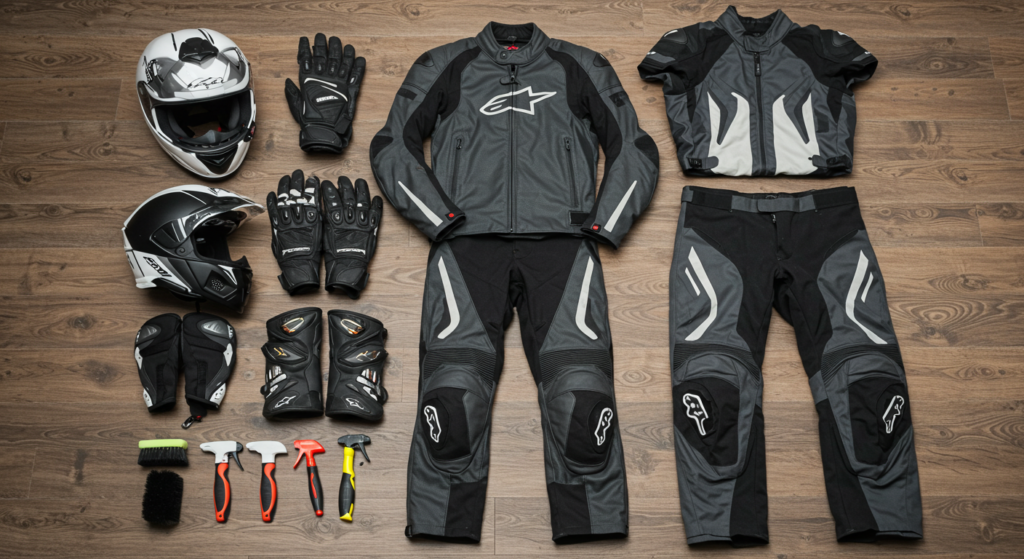
If the family requests formal dress, let riders know whether there’s somewhere to change on arrival. Some venues may be able to set aside a room for jackets and helmets during the service. That gives guests a practical way to follow the dress arrangements and wear their protective riding gear for the journey.
How to Organise and Ride a Memorial Route
Choose a route people can follow
A short stretch of a favourite road can be enough. Check that the start and finish have space for the expected number of bikes and that the venue is expecting you. Ride the route in advance if you can. Look for roadworks, difficult junctions and safe places to regroup off the carriageway. For a larger turnout, staggered departures in smaller groups can make a route easier to manage. The same principle applies to ordinary group rides.
Speak to the local police and council early if you’re planning a public procession, expecting a large turnout or asking for traffic controls. The requirements depend on where and how the event is organised. In England and Wales, qualifying public commemorative processions can require advance notice. The law provides an exception for funeral processions organised by a funeral director in the normal course of their work. Check the rules on public procession notices and ask the relevant council about any temporary road closure.
Brief riders before they set off
Share the route and regrouping points before departure. Explain what riders should do if they miss a turn, get separated or want to leave early. Decide who will shorten or cancel the ride if conditions deteriorate and how they’ll tell everyone. Give anyone joining partway through a designated meeting place so they can join the group while it’s parked.
On public roads, obey traffic lights and give-way signs even if the hearse or the rider ahead has already passed through. Leave enough room to stop and follow the directions of authorised officers. Volunteers can help with duties such as greeting arrivals or directing parking at the venue. Leave control of live traffic to those authorised to do it. Riders can regroup at the agreed stop if they’re separated at a junction. The same approach applies to roundabout safety and when following the Highway Code’s traffic signals.
If you feel too upset to concentrate on the day, you can meet everyone at the finish or ask a friend for a lift. Mention that option in the briefing so people can make the decision without having to explain how they feel. A contact at the finish can let the organiser know who has arrived separately.
Handling Donations at Biker Funerals and Memorial Rides
If the family would like the ride to support a charity, contact it before you advertise. Its fundraising team may already have a donation page or a way to mark gifts in the rider’s name. Tell participants who will receive the money and whether donations are optional. If a fee pays for the venue or refreshments, explain which part, if any, goes to the charity. Ask the venue before placing a collection box and check the permissions that apply if you plan to collect on public land. The Fundraising Regulator’s community fundraising guidance covers permissions, insurance and working with charities.
A UK example is the first Dave Day ride in June 2024. Motorcyclists travelled from London to Barrow-in-Furness to remember Dave Myers, one half of the Hairy Bikers. The ride was followed by a service of remembrance, and the event supported The Institute of Cancer Research and the NSPCC’s Childline service. The Dave Day tribute brought riders and non-riders together along a route that ended in Myers’s hometown.
If people want to contribute directly towards the family’s expenses, get the family’s agreement and describe that purpose plainly. Keep those contributions separate from anything collected for a named charity. For a small gathering, a direct link to the charity’s own donation page can simplify the arrangements and leave organisers free to focus on the people who come.
Supporting the Family After the Farewell
Biker funerals and memorial rides bring people together on a particular day. The help that follows can be quieter and more personal. A friend might collect photographs for the family, offer to return borrowed equipment or take care of a small errand that the family has been putting off. Ask what would be useful and follow through when you’ve agreed to do it.
If you’re thinking about an anniversary ride, check in with the family again. Some people may welcome the chance to tell stories or visit a place that mattered to them. Others may prefer to spend the day privately. A message saying you remember the rider, with no expectation of a reply, can be a thoughtful way to mark the date. Cruse Bereavement Support offers advice on anniversaries and reminders and other ways to remember someone.
The detail that makes a farewell personal can be small. It might be the café where the rider always ordered the same thing, a photo from their first tour or a story from someone who knew them before they owned a bike. If you’re unsure what to do, ask the family whether there’s a memory they’d like people to share. That gives everyone something they can bring to the day.
Follow GHC Sportswear™ Retail on Facebook and Instagram.
Ride smart. Gear up. Know your CE.
Written by the GHC Sportswear™ Retail Team
Trusted by riders who want protection without the blah.