Why Every Biker Secretly Hates Group Rides for Bikers (But Pretends Not To)
Group Rides for Bikers — 7 Essential Tips for a Better Ride
Group rides for bikers can start with a good route and still unravel before the first junction. Someone arrives needing fuel, half the group has a different destination on their sat nav, and the rider at the back has already worked out that “a relaxed pace” means something different to the person leading. By the time you reach the first café, the conversation is about where everyone got separated.
There’s a reason riders keep showing up. A good group ride introduces you to roads you’d never have found alone and gives you people to share them with. The difference often comes down to a few decisions made before anyone starts an engine. Here’s where group rides for bikers tend to go wrong and what riders and organisers can do about it.
Why Group Rides for Bikers Can Be Frustrating
Some riders picture a full day out with lunch and a couple of scenic stops. Others have two hours free and expect to be home before midday. When nobody spells out the plan, a perfectly reasonable coffee stop feels like a delay to half the group. The same thing happens with pace. Two people can agree to take it easy and have very different ideas about what that feels like on a narrow road.
The social side can make it harder to speak up. A rider who’s getting tired might keep going because everyone else seems happy. Someone who wants to leave early might worry they’re letting the group down. The best group rides for bikers make room for those decisions. Sharing the planned stops and making it clear that riders can leave early saves everyone an awkward conversation later.
1. Set a Meeting Time and a Departure Time
Give people a time to arrive and a time you plan to leave. That gap allows for introductions, a short briefing and any last-minute questions. Pick a meeting point with enough room to park and somewhere nearby to refuel if needed. A busy petrol station forecourt might work for three friends, but a larger group needs somewhere everyone can park and hear the briefing.
A short message the evening before can prevent much of the confusion at the start of group rides for bikers. Include the meeting point, departure time, first stop and an estimated finish. If you’re inviting people along for the first time, share the approximate mileage and the types of roads you’ll use. Riders planning a route in the South East can use our motorbike day trips from London as a starting point and adapt the distance to the group.
2. Match the Route and Pace to the Riders
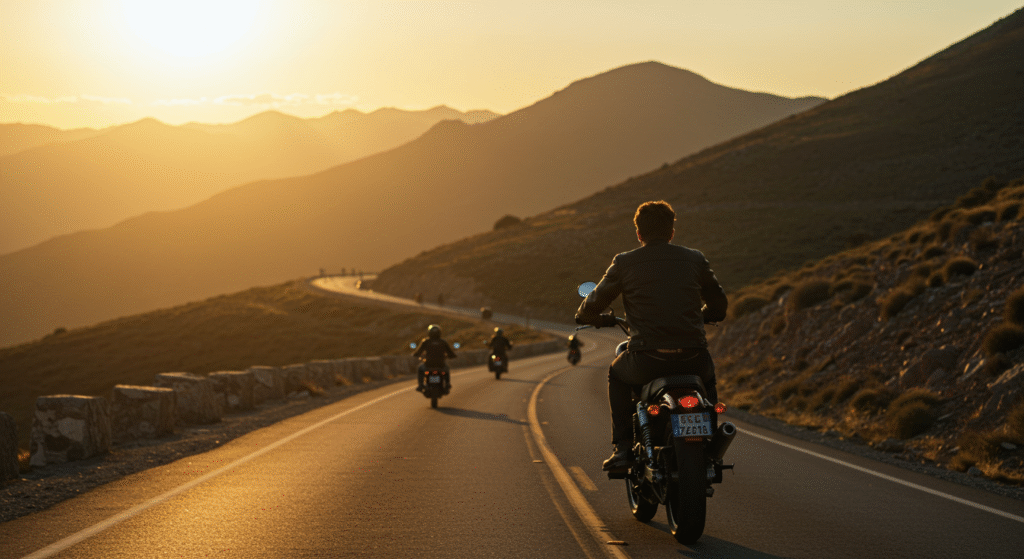
Mixed experience levels can work well on group rides for bikers when the route suits the people who have signed up. Tell riders if the plan includes motorways, narrow rural lanes or a long stretch between stops. For a group with several first-timers, a shorter loop with easy places to pull in gives everyone time to settle into the ride.
A good leader rides at a steady, predictable pace and makes clear that everyone judges the road for themselves. If the bike ahead disappears around a bend, keep a speed that lets you stop within the distance you can see to be clear. At a roundabout, follow the lane markings and wait for a gap you can judge yourself. Traffic can change between the moment the rider ahead enters and the moment you reach the give-way line. Our roundabout safety guide covers how to approach and navigate the junction.
If someone wants individual feedback on their observation, road positioning or cornering, BikeSafe workshops include an observed ride with a police-graded motorcyclist or approved observer.
3. Agree How Group Rides for Bikers Will Regroup
Make sure everyone knows who is leading. On a larger ride, a designated tail rider can help the organiser keep track of who is still with the group. Introduce both riders before setting off and point out their bikes so everyone knows who to look for.
The regrouping plan for group rides for bikers should work even if someone loses sight of the bike ahead. Pick a car park, service area or other suitable place with room for everyone to stop. Share the address or map pin before departure. If someone misses a turn, they can continue to the agreed stop by a route that suits them or pull over somewhere safe and legal to check directions.
Some clubs use a junction-marker system, with a rider indicating a turn from a safe stopping place. If your group uses one, explain who marks the turn, when the marker moves on and what to do if there’s nowhere suitable to stop. Use plain language in the briefing, especially when someone is joining for the first time. Our motorcycle rider lingo guide covers some of the shorthand riders may hear along the way.
4. Leave Space and Make Your Own Overtaking Decisions
Spacing matters on group rides for bikers because one rider’s reaction can affect everyone behind. Leave enough room to stop safely if the vehicle ahead brakes. On high-speed roads and in tunnels where visibility is reduced, Highway Code Rule 126 advises at least two seconds between you and the vehicle ahead, at least twice that on wet roads and more on ice.
A staggered position may suit an open stretch when riders can maintain safe gaps. Move into single file when the road narrows or conditions call for it. On group rides for bikers, adjust your position as visibility, hazards and road conditions change. Leaving room between bikes also gives you more space to choose your line through a bend.
If another rider overtakes, wait until you can assess the road and see a suitable gap for yourself. The space they used may be gone by the time you reach it. Highway Code Rule 163 explains what to check before following another vehicle past slower traffic. If another vehicle moves into the gap ahead of you, ease back to restore your following distance.
5. Keep the Group Manageable and Plan the Stops
Keeping group rides for bikers small can make it easier to brief everyone and find suitable places to stop. Choose the size based on the roads, the riders’ experience and the available stopping places. A few friends who regularly ride together will need a different plan from an open invitation that attracts riders the organiser has never met. The IAM RoadSmart group riding manual suggests considering smaller groups when turnout, differences in ability or route complexity make a large group harder to manage.
Plan fuel stops around the bike with the shortest usable range, and allow time for riders to eat, drink or warm up. For longer group rides for bikers, say which stops are quick breaks and which are longer social stops. If people know that lunch is an hour away and the first stop is just for fuel, they can plan their time accordingly.
6. Make It Easy to Slow Down, Stop or Leave
Peer pressure on group rides for bikers can be as subtle as seeing six tail lights disappear up the road. The organiser can ease it by making clear at the briefing that riders can hang back, take an extra break or head home. If you need to leave early, let the leader or tail rider know at the next safe stop so the group knows you’re accounted for.
A short briefing gives everyone the same expectations. Cover these points before setting off.
- Pace. Everyone rides within their ability and makes their own decisions at junctions and when overtaking.
- Stops. Everyone knows the next planned stop and where to regroup if the group splits.
- Changes. Agree how to pass on a route change or an early departure when riders are safely parked.
- Breaks. Riders can ask for a stop. If someone says they’re tired, cold or struggling with the pace, take them seriously.
The same consideration applies to what people ride and wear. A rider on a smaller bike or in a different style of kit should feel as welcome as anyone else. If comments about bikes, brands or experience start making people feel out of place, our guide to gatekeeping in motorcycle culture explores how those habits affect the group.
7. Choose the Kind of Group Rides for Bikers You Enjoy
Some people love a leisurely club run with time to talk at every stop. Others prefer a short loop with two or three friends and one coffee break. Group rides for bikers can also take a looser format, with everyone meeting at the same café and choosing their own route there. That works well when people want to catch up and have different ideas about which roads to take or how long to spend on the bike.
If you’re joining a ride for the first time, ask how far it goes, who usually attends and what happens if riders lose sight of each other. The answers will help you decide whether it suits you. You might find you’re happiest doing an occasional Sunday ride with friends and keeping the rest of your time on the bike for yourself.
Final Thoughts
Well-run group rides for bikers give each rider room to judge the road, choose a comfortable pace and call it a day when they’ve had enough. If you’re organising the next outing, tell people what to expect, give them a clear place to regroup and leave enough time for the stops you’ve planned. That way, the conversation at the café can be about the ride itself.
Follow GHC Sportswear™ Retail on Facebook and Instagram.
Ride smart. Gear up. Know your CE.
Written by the GHC Sportswear™ Retail Team
Trusted by riders who want protection without the blah.