High Visibility Motorcycle Gear Why Some Riders Want It Gone
High Visibility Motorcycle Gear — Does It Help You Get Seen?
A fluorescent vest looks like an obvious choice on a grey ride to work. Put the same vest over your jacket on a bright Sunday morning and you might wonder whether it’s worth the extra layer. Riders have different tastes, and a garment that feels practical on one trip can feel like a nuisance on the next.
High visibility motorcycle gear can make you easier to notice in the right conditions. Fluorescent material is useful in daylight. Retroreflective material does its job when light falls on it, such as when a driver’s headlights catch your jacket at night. If you know which kind of visibility you need, you can make a useful change without replacing your whole riding kit.
Why Riders Disagree About High Visibility Motorcycle Gear
For some riders the decision is easy. They commute through busy junctions, ride home after dark and want a layer they can put on without much thought. For others, the same layer covers the jacket they chose carefully, adds another thing to carry or sits awkwardly over the shoulders. A rider who leaves the vest at home might still choose a pale helmet or a jacket with reflective detailing.
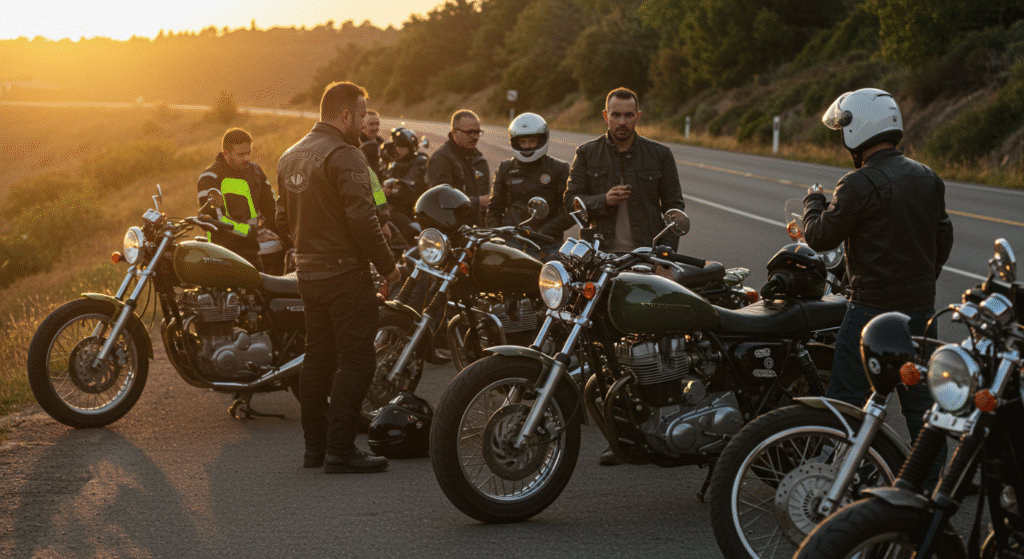
There’s a social side to the debate as well. One group treats a yellow vest as normal. Another has a running joke about anyone wearing one. The conversation gets more useful when someone asks about the ride itself. A commute in winter drizzle puts different demands on your clothing from a short trip to a café in the middle of the day.
High visibility motorcycle gear is easiest to judge when you have a particular use in mind. If the jacket you already own has reflective panels that stay exposed with a backpack on, you might have more night-time coverage than you thought. If the panels disappear when you put on your waterproofs, you know which layer to look at first.
What the Research Says About High Visibility Motorcycle Gear
A 2004 case-control study in Auckland, New Zealand, compared 463 riders involved in crashes that led to hospital treatment or death with 1,233 riders recruited through roadside surveys. After accounting for several other factors, the researchers found that wearing reflective or fluorescent clothing was associated with 37% lower odds of crash-related injury. The published BMJ study explains how the riders were selected and how the results were calculated.
That figure describes an association in the riders studied. The researchers grouped reflective and fluorescent clothing together for that result, so it gives us limited information about how either material performs on its own. When you compare garments, pay attention to what the materials do in the conditions you actually ride in.
The findings give riders a reason to consider high visibility motorcycle gear, especially where it can add contrast. At a junction, a driver still has to look in your direction, notice the bike and judge how quickly you’re approaching. The Highway Code makes that point in its daylight riding advice.
How High Visibility Motorcycle Gear Works in Different Light
Fluorescent panels look especially bright in daylight. They can help a rider stand out against dark vehicles, shaded hedges or a dull road surface. How much they stand out depends in part on what’s behind them. A colour that catches the eye on a country lane may be less distinct against roadworks or a busy row of shopfronts. Look at the coverage as well as the colour, including what’s visible from the sides and rear.
Retroreflective material sends light back towards its source. A strip on a jacket can look ordinary in daylight and show up clearly when lit by headlights. If you ride after dark, check whether those strips are on the back and sides as well as the front, and whether they’re still exposed when you wear a bag. The Highway Code’s advice for riding in the dark explains how reflective clothing and strips help.
If you ride to work in daylight and return after sunset, high visibility motorcycle gear with both materials can serve both parts of the journey. Check your outermost layer before you leave. A reflective panel underneath a plain waterproof jacket will be covered as soon as you put the waterproof on.
Is High Visibility Motorcycle Gear Compulsory?
For ordinary road riding in Great Britain, high visibility motorcycle gear is recommended. The Highway Code rules for motorcyclists suggest fluorescent material for daylight, reflective material for darkness and dipped headlights to help make the bike more conspicuous during the day.
If you’re riding abroad, check the rules for each country on your route. France, for example, requires motorcycle riders to carry a CE-marked high-visibility vest on their person or on the bike. Riders must wear it if they have to leave an immobilised motorcycle on or near the road after an emergency stop. The French government’s motorcycle equipment guidance sets out when each requirement applies.
5 Practical Checks for Choosing High Visibility Motorcycle Gear
- Start with the ride you do most. A daytime commuter might choose fluorescent panels. A rider who often comes home in the dark should look closely at reflective coverage. For a mix of both, look for both materials on the outer layer you’ll actually wear.
- Check more than the front. Put on your high visibility motorcycle gear with your usual jacket, luggage and waterproofs. Ask someone to look at it from the front, sides and rear while you sit on the parked bike. A backpack can cover a rear panel, and sleeves can sit differently once you reach for the bars.
- Check how it feels in your riding position. A separate vest should sit securely over your jacket and give you room to reach the controls and turn your head. Try it with your usual layers. If it bunches around the shoulders or flaps enough to distract you, try a different fit or a jacket with integrated panels.
- Read the labels for visibility and protection. Some high visibility motorcycle gear is designed primarily to make you easier to see. If you’re buying a protective riding jacket, check its garment classification and which armour comes with it. Our motorcycle CE ratings guide explains how to read those labels.
- Inspect the kit you already have. Look for reflective strips that are dirty, worn or peeling. Follow the garment’s care label when washing it. Check that the headlight, brake light and indicators work and that your luggage leaves them visible. Our motorbike gear maintenance guide covers regular checks for the rest of your kit.
How to Add Visibility Without Changing Your Style
If you prefer dark riding gear, start with the details you’re happy to wear. A jacket with reflective trim is an understated option for night riding. For daylight, you might choose contrasting panels or a brighter colour the next time you replace a helmet, with fit as the first consideration. High visibility motorcycle gear can be one piece of your kit, such as an outer layer you keep for journeys home after dark.
If you buy a separate vest, decide where you’ll keep it when you take it off. A layer you can reach easily when you stop for fuel is more likely to come out when the weather changes. If you’re replacing an old jacket anyway, compare its fit, abrasion resistance and armour alongside the visibility features. Our guide to choosing a motorcycle jacket covers those decisions.
Repeat the check when you change your winter kit. High visibility motorcycle gear that works with a summer jacket may sit differently over thicker sleeves or under waterproofs. If you ride through the colder months, our winter motorcycle riding tips can help you plan which layers you’ll wear together.
Ride as Though You May Still Be Missed
Even in high visibility motorcycle gear, a parked van can hide you from someone waiting to pull out. A driver can look towards you and still misjudge the gap. Give yourself space to respond, particularly at junctions where vehicles can enter your path. Let your speed and position reflect what you can see, the road surface and the room you have to stop. The same approach applies at roundabouts, where each rider has to judge traffic for themselves. Our roundabout safety guide covers those decisions in more detail.
In Great Britain, Highway Code Rule 226 requires headlights when visibility is seriously reduced. The Code gives being unable to see more than 100 metres as a general guide. If your route takes you through fog or heavy spray, think about the visibility of the bike as well as the high visibility motorcycle gear you’re wearing. Before setting off, check that your lights are clean and that luggage leaves them clear. On the road, leave enough room to stop within the distance you can see to be clear.
The Bottom Line on High Visibility Motorcycle Gear
Choose the kit for the roads and light you ride in. If you want more contrast during the day, look at fluorescent panels. If you often ride after dark, check which reflective areas stay visible with your waterproofs and luggage in place. Try the whole setup before deciding what to buy. One change to the layer you already wear may give you the coverage you were looking for.
Follow GHC Sportswear™ Retail on Facebook and Instagram.
Ride smart. Gear up. Know your CE.
Written by the GHC Sportswear™ Retail Team
Trusted by riders who want protection without the blah.