Kevlar Motorcycle Clothing: Because Bandages Are Out of Style
Kevlar Motorcycle Clothing — What to Check Before You Buy
A pair of riding jeans, a textile jacket and a casual-looking hoodie can all contain Kevlar®, yet use it in different places and for different purposes. One garment may have a reinforcement panel beneath the outer fabric. Another may use the fibre in stitching or in the mesh pockets that hold the armour. From the outside, those details can be hard to see.
To compare Kevlar motorcycle clothing, start with the finished garment. Find out where the fibre is used, which protective standard the garment meets and how it fits on the bike. A label can tell you what was assessed. Trying the garment in your riding position tells you whether it works with the rest of your kit.
What Kevlar Motorcycle Clothing Uses the Fibre For
Kevlar® is DuPont’s brand of para-aramid fibre. In Kevlar motorcycle clothing, manufacturers can use it in fabric, reinforcement layers or thread to help improve tear and abrasion resistance. A panel beneath the seat of a pair of jeans serves a different purpose from a mesh pocket that holds an impact protector. DuPont explains these uses in its motorcycle apparel guide.
The outer material, seams, closures and fit all affect how much coverage stays in place during a fall. That’s why two items of Kevlar motorcycle clothing can have different garment classes or different areas of reinforcement. Our riding denim comparison shows how those construction choices change a familiar garment.
Leather and textile garments can meet the same EN 17092 class, and both can vary in weight, fit and ventilation. If you’re deciding between them, check what the finished garment is rated to do and try it with your usual layers. A jacket that feels comfortable over a T-shirt may fit quite differently over a jumper.
Which Types of Kevlar Motorcycle Clothing Can You Buy?
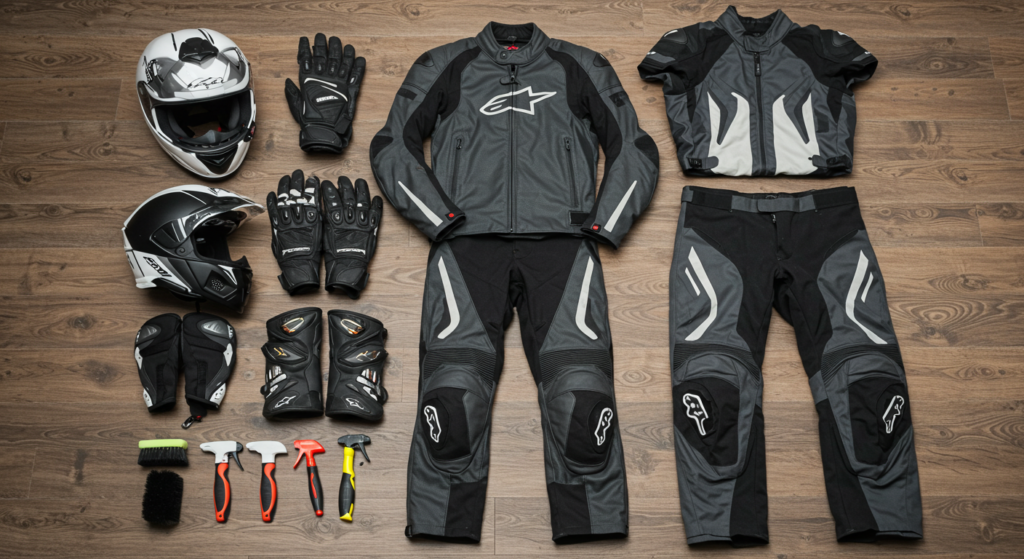
Different pieces of Kevlar motorcycle clothing call for different checks. A jacket needs to keep you covered when you reach forward, while gloves have to let you operate the levers. Ask the retailer for the intended use and applicable standard when a listing describes the fabric but gives few details about the finished item.
| Item | What to check |
|---|---|
| Riding jacket | Garment class, shoulder and elbow protectors, cuff and waist fastenings, and whether a back protector is supplied. |
| Riding jeans or trousers | Reinforcement areas, knee and hip armour, and where the hems sit with your boots when you’re seated. |
| Riding hoodie or overshirt | Whether it has a protective garment class, where the armour sits and how securely the cuffs and hem stay in place. |
| Motorcycle gloves | EN 13594 markings, the wrist fastening and how easily you can operate the controls. |
| Base layer or protector carrier | How the maker intends you to wear it and which areas or hazards it’s designed to cover. |
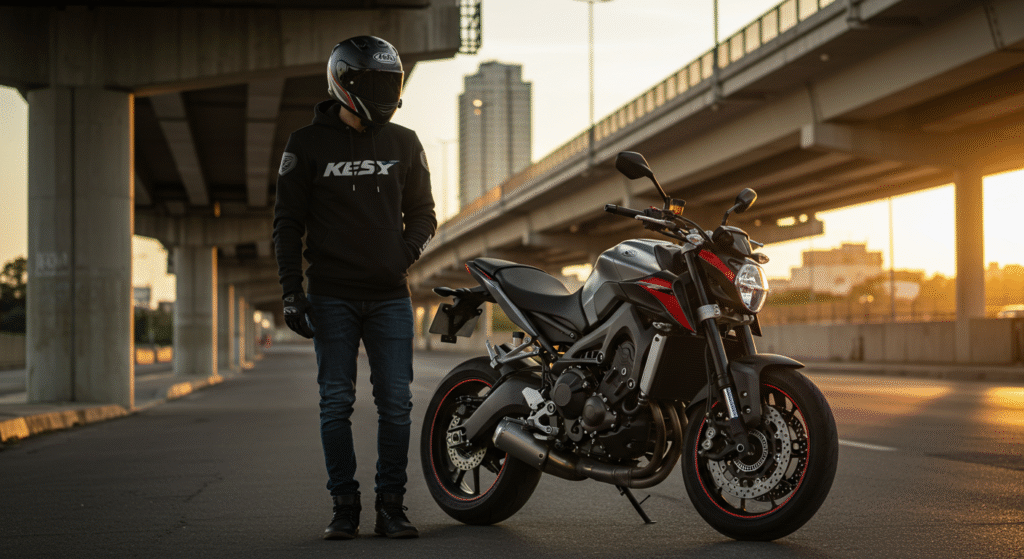
A riding hoodie can be useful if you want something you’ll also wear after you park. When you compare Kevlar motorcycle clothing in that style, find out whether the hoodie is a protective garment in its own right or a layer meant to be worn with other kit. Try reaching forward and check whether the hem rides up. It’s the same fit check you’d make on a motorcycle jacket.
An inner layer can add comfort or hold impact protectors, depending on the design. Class C garments under EN 17092 provide impact protection in the areas covered by their protectors. The class sets no minimum abrasion protection. SATRA explains how these garments are intended to be used in its guide to protective garment classes.
How to Read the Labels on Kevlar Motorcycle Clothing
Shopping for Kevlar motorcycle clothing is easier when you separate three pieces of information. The fibre description tells you what material the maker uses. The garment class describes the requirements the finished garment meets. The level marked on the armour describes the performance of that protector in an impact test.
Start with the jacket or trousers. Under EN 17092, Classes A, AA and AAA have progressively more demanding requirements. The tests cover abrasion resistance, tear strength and seams, among other features. For a garment supplied as personal protective equipment in Great Britain, the manufacturer should provide a declaration of conformity or tell you where to find it. The government’s PPE marking guidance explains what the documentation should identify.
Then look at the pads. Shoulder, elbow, knee and hip protectors can be assessed under EN 1621-1. Level 2 has a lower permitted limit for transmitted force in that test than Level 1. Back protectors have their own standard, EN 1621-2. SATRA explains these impact protection standards, and our guide to motorcycle CE ratings shows where to look for the different markings.
Gloves have their own standard, EN 13594. If Kevlar motorcycle clothing is sold as a matching set, check the markings on each item. The jacket’s class applies to the jacket. SATRA explains the separate requirements in its overview of motorcycle glove testing.
If you’re buying second-hand, ask for a photo of the garment label and the markings on the protectors. Check whether all the pads are still present and whether they match the maker’s instructions. Ask about any crash damage or repairs, especially around seams and protector pockets. If an insert is missing, find out whether you can get a compatible replacement before you decide how much the garment is worth to you.
What Crash Research Can Tell You
An observational study of 212 motorcyclists who had crashed found that riders wearing motorcycle jackets, trousers or gloves were less likely to be admitted to hospital. The researchers compared categories of protective gear. The findings describe an association across the riders studied, while the performance of any particular jacket or pair of trousers depends on the model and the circumstances of the crash.
When choosing Kevlar motorcycle clothing, focus on the details you can check. See whether the knee pads stay over your knees when you sit down and whether the sleeves remain in place when you reach the controls. Those checks are easiest with the exact kit in front of you.
Fit Kevlar Motorcycle Clothing With the Rest of Your Kit
Try Kevlar motorcycle clothing with the layers, gloves and boots you usually wear. Sit with your knees bent and arms forward as you would on the bike. With the fastenings closed, check where the sleeves and hems finish and whether the armour sits where the maker intends.
- Reach forward. Check that the jacket still covers your lower back and that the sleeves stay in contact with your gloves.
- Bend your knees. Make sure the knee protectors stay centred and the trouser hems still meet your boots.
- Move your hands and wrists. Check how the gloves and cuffs overlap. You should be able to reach the levers comfortably, as our guide to riding gloves explains.
Weather can change how Kevlar motorcycle clothing fits. A jacket that feels right over a T-shirt may feel tight over a winter layer. Waterproof overtrousers can bunch at the ankles. Try the combinations you expect to use and check the product’s weather specification separately. Our winter riding guide covers layering and visibility for colder trips.
Care and Value Between Rides
Follow the sewn-in care label for your Kevlar motorcycle clothing. The instructions depend on the whole garment, including the outer fabric and any lining or coating. If the manufacturer tells you to remove the armour before washing, note which pocket each pad came from. Refit the pads in the correct orientation once the pieces are dry. Our gear maintenance guide covers checks you can make between rides.
Inspect the seams, zips and armour pockets periodically. After a fall, follow the maker’s advice on inspection or replacement before relying on the gear again. A stretched pocket or a closure that no longer holds can change where a protector sits, even when the outside of the garment looks tidy.
When pricing Kevlar motorcycle clothing, compare what comes in the box. A jacket may need a separate back protector. Trousers may include knee armour and offer hip protectors as an extra. If you’re ordering online, check the return conditions so you know whether you can try the garment on indoors with your other kit.
What GHC Sportswear™ Retail’s Riding Jeans Include
Our men’s riding jeans use 12 oz cotton denim with Kevlar® reinforcement beneath the denim at the seat. Kevlar® mesh pockets hold the included removable CE Level 1 knee and hip protectors. Stretch panels at the knees and waist help accommodate the seated riding position. If you’re comparing them with other Kevlar motorcycle clothing, check the reinforcement locations and included armour for each model.
Use the size guide as a starting point, then check the fit with your boots on and your knees bent. For any item of Kevlar motorcycle clothing, the details worth checking are the protection you can verify, the coverage you keep when you sit on the bike and how easily you can move in it with the kit you already own.
Follow GHC Sportswear™ Retail on Facebook and Instagram.
Ride smart. Gear up. Know your CE.
Written by the GHC Sportswear™ Retail Team
Trusted by riders who want protection without the blah.