Motorcycle Airbag Apparel: Why Your Bike Has ABS but Your Shirt Doesn’t
Motorcycle Airbag Apparel — How It Works and What to Check
You can see how a riding jacket fits and where its elbow pads sit. With an airbag vest, some of the most important details are in the manual. When is it ready to deploy? What makes it trigger? Will it have room to inflate under the jacket you already wear?
Motorcycle airbag apparel adds an inflatable layer to a rider’s kit. It’s designed to reduce the force of an impact in the areas it covers when it inflates in time. Start by comparing how each model triggers, where it offers protection and what you’ll need to do to keep it ready for the rides you make most often.
How Motorcycle Airbag Apparel Works
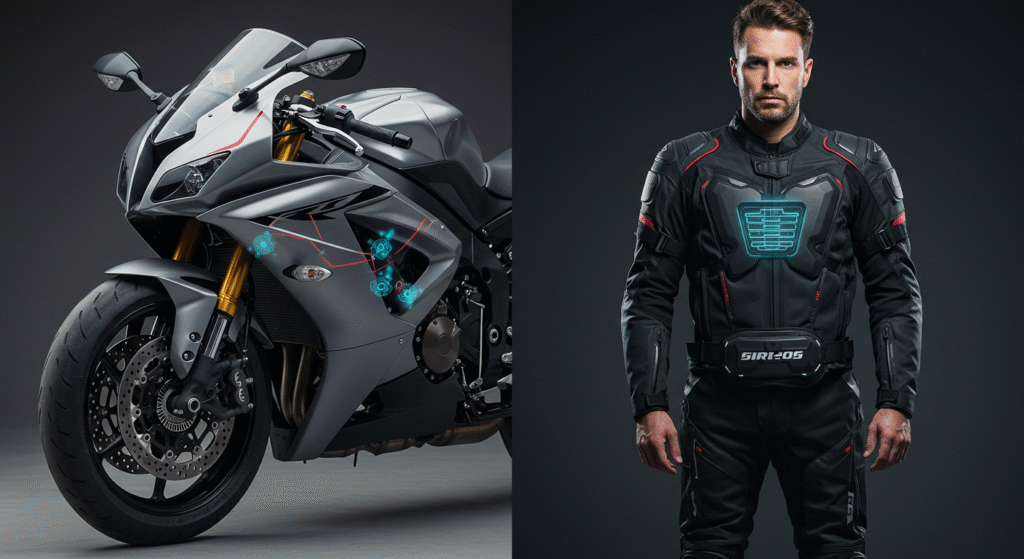
Motorcycle airbag apparel usually takes the form of a vest, a layer worn beneath a compatible jacket, or a system built into a jacket or suit. Inside is an inflatable bag connected to a gas cartridge or inflator. When the trigger operates, gas fills the bag. The inflated layer can spread the load of an impact and reduce the force transmitted to the body in the areas it covers.
Timing matters because the system needs to trigger and build pressure before it can provide the intended protection. A quoted inflation time may start when the trigger operates. The time it takes the system to respond to the crash comes earlier. France’s road safety observatory measured detection and inflation separately in its wearable airbag tests.
Imagine a collision in which a rider strikes a vehicle before coming off the bike. The interval before that first contact can be quite different from the interval before a later impact with the road. When comparing motorcycle airbag apparel, check what the maker includes in any timing figure. An inflation time and a figure that includes the trigger response measure different parts of the sequence.
Coverage also varies. Some models protect the chest and back, while others extend over areas such as the shoulders. Look at the coverage diagram for the exact model of motorcycle airbag apparel you’re considering. The shape of a vest hanging in a shop tells you little about which areas the inflated bag covers. Keep wearing the rest of your protective riding gear for coverage elsewhere and for hazards such as abrasion.
Tethered and Electronic Motorcycle Airbag Apparel
The clearest difference is what starts deployment. Mechanically triggered motorcycle airbag apparel typically connects to the bike by a tether. Sufficient separation pulls the trigger. An electronic system uses sensor data to decide when to inflate. Its activation conditions depend on the model and the riding mode.
| What to compare | Tethered system | Electronic system |
|---|---|---|
| What triggers it | A pull on a correctly attached tether. | The device detects a crash pattern under its programmed conditions. |
| What to do before riding | Connect the tether and check its setup. | Check battery charge, the status indicator and the selected mode. |
| What to check on another bike | Whether you can install the tether correctly on that bike. | Whether the model needs a separate sensor or a different setup. |
| What to do after deployment | Follow the model’s inspection and rearming instructions. | Check whether the maker permits an owner reset or requires authorised servicing. |
Helite’s motorcycle airbag guidance describes how its mechanical models use a clip and lanyard. For a tethered system, making the connection is part of your departure routine. Follow the instructions for the attachment point and tether setup on your bike. If you frequently swap motorcycles, check what it takes to prepare each one before relying on the same vest.
Electronic motorcycle airbag apparel can use accelerometers and gyroscopes to monitor motion. Read the manual to see when the device is ready to deploy and which conditions apply when the bike is stationary. Dainese’s airbag operating guide, for example, describes different activation conditions for its road and off-road modes. If you want protection while waiting in traffic, check whether the specific model can deploy at a standstill.
What Crash Research Says About Motorcycle Airbag Apparel
An observational study of airbag vests used two datasets of motorcyclists involved in crashes. In the two analyses, riders whose vests inflated had an estimated 37% and 50% lower risk of chest and abdominal injuries, respectively when ordered from the smaller to the larger estimate. The findings for serious injuries in those areas were inconclusive. The study compared real crashes, where the circumstances and available injury information varied.
A separate analysis of French police crash records found no statistically clear difference in fatality risk between airbag users and non-users after adjustment. Few of the riders in that dataset wore airbags. The studies measured different outcomes. An association with fewer chest and abdominal injuries answers a different question from whether airbag use reduces deaths across all types of crash.
For a rider choosing motorcycle airbag apparel, the practical starting point is the model’s coverage and triggering information. Think about the journeys you make most often. A vest that fits over a commuting jacket and can be checked quickly each morning serves a different routine from a system you buy for occasional track use.
Check Certification, Coverage and Jacket Compatibility
The British Standards Institution describes BS EN 1621-4 as a standard for mechanically activated inflatable protectors. If you’re comparing electronic motorcycle airbag apparel, read the model’s documentation to see how it was assessed and which parts of the system the assessment covers. Check the stated protection for any conventional back protector supplied with the vest as well.
For a jacket with a built-in airbag, check the jacket’s garment classification separately from the inflatable protector. An airbag test and a garment test address different features. Our guide to motorcycle CE ratings explains how to read the markings on the garment and its protectors.
Try motorcycle airbag apparel with the clothing you’ll actually wear. If the vest goes under a jacket, check the manufacturer’s clearance requirements with that jacket zipped up. If it goes over the jacket, check that it closes securely and allows you to reach the controls. Ask the maker about compatibility with waterproof layers or a backpack before adding either to the setup.
Sit with your arms forward as you would on the handlebars. Check whether the collar gets in the way when you turn your head and whether the lower edge catches at the waist. If you change jackets between summer and winter, check both combinations. The same fit questions matter when you’re choosing a motorcycle jacket to wear with the airbag.
Rearming and Looking After Motorcycle Airbag Apparel
The next step after deployment depends on the product and its condition. Some models let the rider fit the specified replacement cartridge after following the maker’s inspection and rearming procedure. Others need a service centre to inspect the system or replace the inflator. The procedure can vary by model and country, as Alpinestars explains in its rearming guidance.
If you’re budgeting for motorcycle airbag apparel, ask about the price and availability of replacement inflators, service intervals and turnaround times. Check what the price includes, especially if the control module is listed separately. Ask whether any ongoing fees apply. If you depend on the motorcycle for work, knowing where to get the system serviced can matter as much as the upfront price.
Between rides, check for damaged fastenings, worn fabric and a tether that no longer clips in correctly. On an electronic model, learn what the status lights mean so you can deal with a low battery or a fault before leaving. Follow the maker’s cleaning instructions for the airbag and use our gear maintenance guide for the rest of your kit.
ABS and Motorcycle Airbag Apparel Do Different Jobs
ABS acts during braking. It uses information about wheel speed to adjust brake pressure when a wheel is at risk of locking. Its purpose is to help the rider maintain control under braking, as Bosch explains in its motorcycle ABS overview.
Motorcycle airbag apparel adds a cushioning layer around the rider when it deploys. A bike can have ABS, and the rider can still choose an airbag as another part of their kit. Both sit alongside decisions you make on every ride, including your approach speed and the space you leave to stop. Those decisions are part of good road judgement whatever you wear.
Six Checks Before You Buy Motorcycle Airbag Apparel
For road riding in Great Britain, GOV.UK distinguishes the motorcycle helmet requirements from its advice to wear specialist protective clothing. If you’re buying for a track day or competition, check the organiser’s equipment rules for that event and confirm that your chosen garment and mode are suitable.
- Coverage. Read the diagram for the inflated bag and see which areas the model claims to protect.
- Trigger conditions. Find out when the device is ready and what conditions apply when stationary or riding slowly.
- Intended use. Check whether the mode or system is designed for the road, track or off-road riding you do.
- Fit and clearance. Try it with your jacket and usual layers. Check compatibility with anything you carry on your back.
- Rearming. Ask who can inspect and reset it after deployment and where you can get the correct inflator.
- Daily routine. Decide when you’ll check the tether, battery or status indicator before setting off.
The right motorcycle airbag apparel for you is a system you can fit correctly, check before leaving and maintain over time. Start with your most common journey and the kit you already wear. That will help you narrow the choice to models that suit how you actually ride.
Follow GHC Sportswear™ Retail on Facebook and Instagram.
Ride smart. Gear up. Know your CE.
Written by the GHC Sportswear™ Retail Team
Trusted by riders who want protection without the blah.