Motorcycle Rider Ego: Why Some Bikers Think They’re Untouchable
Motorcycle Rider Ego — When Confidence Clouds Judgement
The group has just passed a slow van. You’re still behind it, and the riders ahead are disappearing around the next bend. For a second, the most important thing seems to be getting back to them. Then you look at the road and realise you can’t see far enough ahead to overtake. That small shift in attention is what this article means by motorcycle rider ego. The pressure to keep up briefly mattered more than the view in front of you.
You can love riding, take pride in your skill and still recognise that feeling. It can show up on a powerful sports bike, a commuter or the same machine you’ve ridden for years. The useful question is what happens next. Can you let the group go, wait for a clear opportunity and carry on enjoying the ride?
What Motorcycle Rider Ego Looks Like on the Road
Motorcycle rider ego is a shorthand for moments when your idea of yourself as a rider starts to shape a decision more than the conditions do. It can feel like being unwilling to turn back when the weather changes, pushing on because you said you’d lead, or taking an overtake you’d happily leave if you were out by yourself.
Confidence helps when it gives you room to make a decision calmly. You know you can wait behind the van and reassess later. You can recognise when you’re tired or when a new bike feels unfamiliar. Motorcycle rider ego often comes with a sense of urgency. You feel you have to do something now, even though there’s no need to. That feeling can be your cue to take another look at the road.
How Familiar Roads Can Feed Motorcycle Rider Ego
Experience gives you a memory of what a route usually looks like. On the way to work, you might know where the road tightens or where a side road appears just beyond a hedge. Familiarity can help you look in the right place earlier. It can also tempt you to expect the same clear stretch you had yesterday.
A road safety review cites a Scottish study in which about two-thirds of riders surveyed thought they were less likely to crash over the following year than other riders of the same age and experience. The result describes how riders judged their own chances. The research review on rider risk discusses what that finding can tell us about confidence and where the evidence is limited.
On a familiar road, motorcycle rider ego can sound as ordinary as “I know this bend.” It’s useful to follow that thought with a question. How much of it can you see today? In Great Britain, Highway Code Rule 126 advises travelling at a speed that lets you stop within the distance you can see to be clear. A route you know well still changes with traffic, weather and the road surface.
A near miss is also worth a second look after you park. You might remember how well you handled it and overlook the earlier decision that left you with so little time. Work backwards from the moment you reacted. When could you first have seen the vehicle, and what might have made it harder to notice? That can give you one thing to do differently on your next ride.
Motorcycle Rider Ego and the Pressure to Keep Up
A group can make an ordinary decision feel public. If you’re at the back and everyone else gets through a junction, you may feel that waiting holds people up. If you’re leading, you may feel expected to keep going even after the pace stops suiting the conditions. Agreeing where the group will regroup takes some of that pressure off both riders.
Overtaking is a good example. The rider in front may have had a clear view and enough room to pass. Your view and the space available can change in seconds. Highway Code Rule 163 points out that a gap may only be large enough for one vehicle. Leave enough space to make your own assessment and let the others go ahead when the opportunity has passed.
The way a group talks at the next stop also matters. If someone hangs back because they want a better view or more room, take that decision seriously. A rider who says “I needed a minute there” makes it easier for the next person to speak up. Agreeing on pace and stops before you leave gives motorcycle rider ego less room to shape the day. Our guide to group rides for bikers explains how to make that plan.
How Social Media Can Shape Motorcycle Rider Ego
A short video can make a ride look like a string of decisive moments. You see the overtake or the corner. The waiting, the turn taken more slowly and the decision to call it a day can all stay out of the edit. If you start comparing your whole ride with someone else’s highlight reel, it’s easy to forget how much they left out.
Motorcycle rider ego can show up when you’re filming your own ride too. If you catch yourself thinking about how a manoeuvre will look, bring your attention back to the road and leave the footage for later. You can learn from an uneventful clip. Look at when you first spotted a junction, how early you made a decision and whether you gave yourself enough time to change it. Our article on riding and social media explores how posting can change what riders pay attention to.
5 Habits That Help Keep Motorcycle Rider Ego in Check
- Notice what you’re telling yourself. Phrases such as “I can’t be the only one who waits” or “I should be quicker by now” are cues to look again. Focus on what you can see, how much time you have and how much space is available.
- Set a regrouping point before you leave. Share the address of the next stop. Agree what people should do if a junction or a set of lights splits the group. Knowing you can meet everyone at the café takes pressure off a decision made on the move.
- Change the plan when conditions change. If you’re tired, distracted or riding in weather you hadn’t planned for, stop somewhere safe and decide what still makes sense. A shorter loop or a longer break can make the rest of the day more enjoyable. The same applies if you notice you’re riding angry and need time to settle.
- Ask for one specific piece of feedback. Ask a qualified observer about something you can work on, such as how early you plan for junctions. A BikeSafe workshop includes an observed ride with a police-graded motorcyclist or approved observer. For a longer programme, IAM RoadSmart’s Advanced Rider course pairs riders with a qualified volunteer observer.
- Talk through one decision after the ride. Pick a moment that made you rush. What did you see? What did you assume? What would you do with the same view tomorrow? Reviewing a specific decision makes motorcycle rider ego easier to recognise the next time it shows up.
These habits are useful at any experience level. If you’re leading a ride, tell people why you’ve decided to wait or shorten the route. That lets newer riders see that sound judgement includes changing your mind. It also helps keep motorcycle rider ego from becoming part of the group’s idea of what a good ride looks like.
Build a Gear Routine That Fits the Ride
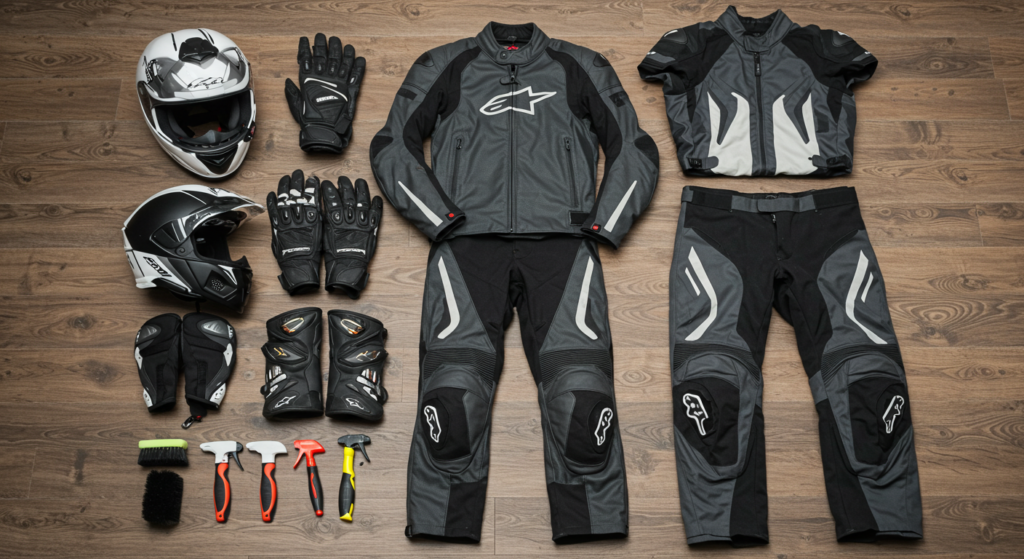
Motorcycle rider ego can creep into kit decisions when the ride seems too short or familiar to justify getting ready. If you find yourself skipping gloves on a quick errand, keep them where you pick up your keys. If your trousers are uncomfortable after twenty minutes, check how they fit on the bike and where the protectors sit. Once you know why the gear gets left behind, you can do something about it.
Before setting off, check your helmet fastening, cuffs and any loose straps. Make that part of getting ready for every ride, whether you’re going to the shops or spending the day on the bike. Our guide to motorcycle protective gear explains what different pieces of kit are designed to do.
What a Better Riding Culture Looks Like
Motorcycle rider ego is easier to manage in a group that welcomes questions. Someone returning after a long break might ask for a gentler route. A newer rider might want to know where they can stop if they’re uncomfortable. Both questions give the organiser information they can use before anyone sets off.
Give credit for decisions that rarely make it into the story afterwards. A rider stays back when the view is poor. Someone checks on the person who missed a turn. The ride leader sees the weather change and picks a shorter route. Our article on gatekeeping in motorcycle culture looks at how habits like these affect who feels welcome on the next outing.
The Bottom Line on Motorcycle Rider Ego
The next time you feel rushed to keep up, ask whether you’d make the same decision alone. Give yourself time to look again. That’s a practical way to spot motorcycle rider ego before it changes what you do. You can let the others go ahead, meet them at the agreed stop and still have a good ride to talk about when you get there.
Follow GHC Sportswear™ Retail on Facebook and Instagram.
Ride smart. Gear up. Know your CE.
Written by the GHC Sportswear™ Retail Team
Trusted by riders who want protection without the blah.